

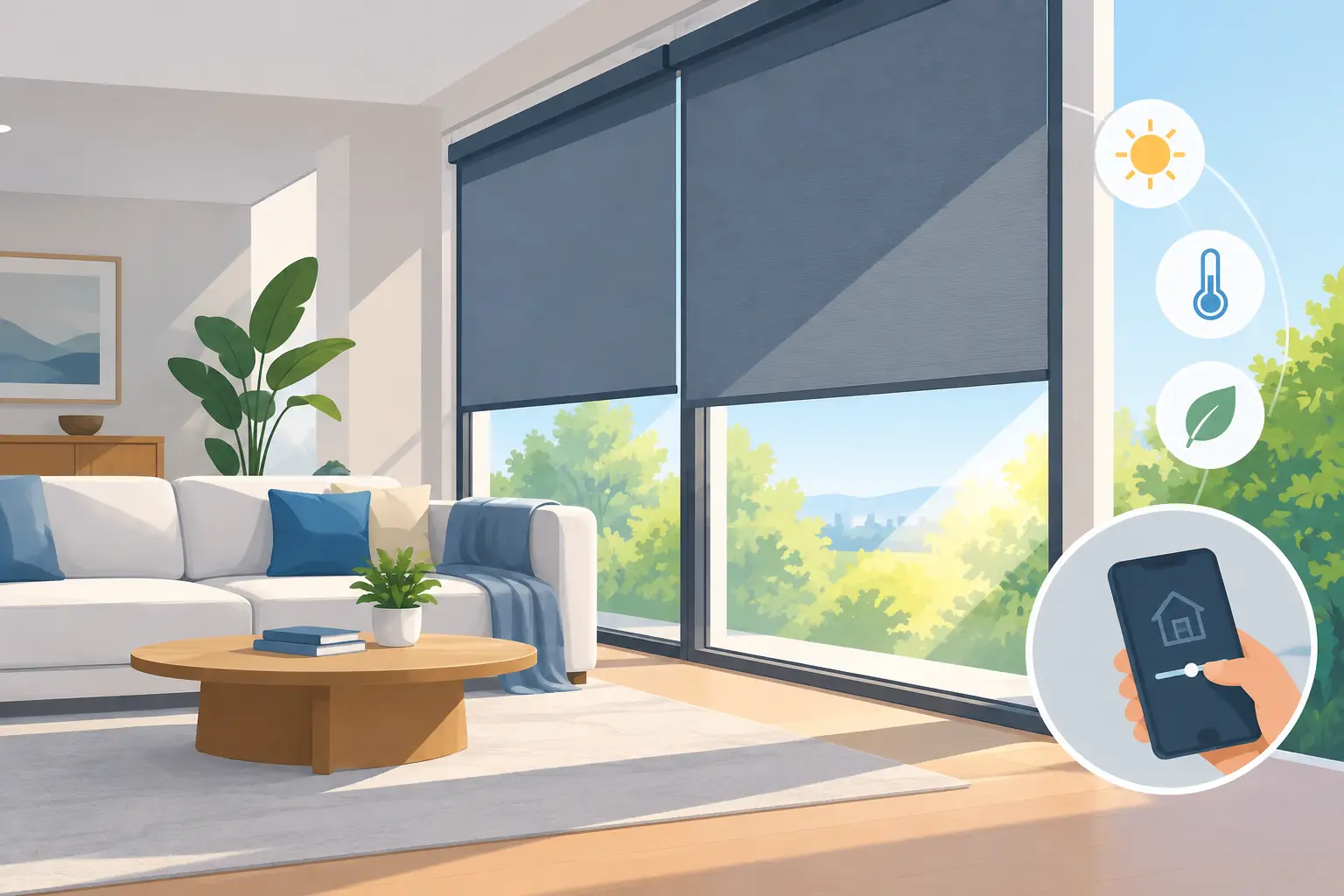
A west-facing glass wall can turn a beautiful living room into the hottest room in the house by late afternoon. A smart home shading guide starts there: not with a remote control, but with the real conditions your windows, balcony, skylight, or patio must handle every day. The right automated shading system controls glare, heat, privacy, and atmosphere while making the architecture feel more intentional.
Smart shading is not one product category. Motorized curtains, roller blinds, honeycomb blinds, outdoor Zipguide blinds, retractable awnings, and skylight systems solve very different problems. Choosing by appearance alone often leads to a room that still feels too bright, too exposed, or too warm. Choosing by function first creates comfort that looks as good as it performs.
Start With What the Space Needs to Control
Every opening has a job. A bedroom may need complete darkness and privacy. A double-height living area may need solar control without losing the view. A balcony may need protection from low sun, wind-blown rain, dust, and insects. A glass roof needs a shading system that can manage intense overhead heat without crowding the room below.
Look at when sunlight enters, not only where the window faces. East-facing rooms receive sharp morning glare. West-facing rooms usually carry the strongest afternoon heat. South-facing glass can bring consistent brightness, while skylights receive direct overhead exposure for much of the day. In warm, high-sun locations, this assessment affects comfort, air-conditioning demand, furniture protection, and how usable a room feels.
Privacy is equally specific. Sheer curtains can soften a daytime view, but they do not provide true nighttime privacy when interior lights are on. Blackout curtains, dim-out roller blinds, or layered systems are stronger choices for bedrooms, street-facing windows, and close neighboring properties. For many homes, the best answer is two layers: a light-filtering layer for daytime and a blackout layer for full control after dark.
Choose the Right Smart Shading System
Motorized curtains for large windows and a softer finish
Motorized curtains are the natural choice for wide windows, sliding doors, bay windows, and tall façades. They add fullness and warmth that blinds cannot replicate, especially in living rooms, master suites, hotel-style bedrooms, and formal dining spaces. With one touch, the curtains can open fully to frame a view or close across a large expanse of glass without the daily effort of pulling heavy fabric.
For stronger performance, pair sheer curtains with blackout drapes on a dual track. The sheer layer diffuses harsh daylight while preserving a bright, relaxed interior. The blackout layer creates a darker, more private setting for rest, movies, or daytime heat control. LED-integrated curtain systems can add another design dimension, turning a plain window wall into a controlled evening feature.
Roller and zebra blinds for clean, precise light control
Roller blinds suit spaces that call for crisp lines and minimal visual weight. They work particularly well in condominiums, kitchens, home offices, and contemporary commercial interiors. Screen fabrics reduce glare while maintaining outward visibility, making them a practical choice for workspaces with strong daylight.
Zebra blinds offer adjustable light filtering through alternating sheer and opaque bands. They are ideal when occupants want to tune the amount of daylight throughout the day without fully raising the blind. Their appearance is modern and compact, though they are not the first choice where total blackout is essential. For bedrooms, choose a dedicated blackout roller blind or combine the system with side curtains for better coverage.
Honeycomb blinds for insulation and compact performance
Honeycomb blinds are built for rooms where insulation matters as much as light control. Their cellular structure creates an air pocket that helps reduce heat transfer at the glass. This makes them a strong option for sun-exposed windows, bedrooms, and spaces where air-conditioning is used frequently.
They also stack neatly when raised, which is useful for smaller windows or interiors with a clean, space-efficient style. The trade-off is aesthetic: honeycomb blinds deliver a refined, architectural look, but they do not offer the flowing softness of curtains. They are performance-led shades for owners who want a quieter visual profile with improved thermal comfort.
Smart skylight and ceiling blinds for overhead heat
Skylights and glass roofs are dramatic design features, but they can become major heat sources without proper shading. Standard curtains are not designed to operate horizontally or overhead. Smart skylight and ceiling blind systems are made for these difficult-to-reach areas, giving owners control over direct sunlight without climbing, pulling poles, or leaving the glass exposed all day.
Automation matters most here. A scheduled system can close before the strongest midday sun arrives, then reopen when the light becomes comfortable. For a stairwell, atrium, top-floor lounge, or glass-roof extension, this is one of the most effective upgrades for protecting interior comfort and preserving the architectural impact of the space.
Outdoor blinds, awnings, and pergolas for usable exterior space
Indoor shades manage what has already reached the glass. Outdoor shading stops much of the sun before it enters, which is why it is often the stronger solution for patios, balconies, and exposed openings. Zipguide outdoor blinds provide a taut, guided screen that helps block sun, glare, wind, dust, and light rain while maintaining a polished façade.
For outdoor dining zones and balconies, the right fabric can also improve privacy without making the area feel closed in. A WireGuide system may suit applications that need a lighter visual structure, while a retractable awning provides broad overhead coverage for a patio or terrace. Pergolux shading creates a more defined outdoor room, bringing shade and architectural presence to gardens, pool decks, and hospitality spaces.
No outdoor system is identical. Consider wind exposure, drainage, installation surfaces, and whether the priority is sun protection, rain shelter, insect control, or privacy. A beautiful outdoor shade that is undersized for the opening or unsuitable for the weather conditions will not deliver the result the space deserves.
Make Automation Work for Daily Life
A motor is only smart when it makes the home easier to live in. The most useful controls are simple: wall switches, handheld remotes, mobile apps, timers, and voice commands. For larger homes or projects, grouped control lets multiple shades move together. One command can close every west-facing blind before sunset or open bedroom curtains gradually in the morning.
Schedules are especially valuable for heat management. Set solar-exposed shades to close during peak sun hours, even when nobody is home. In bedrooms, automate blackout curtains for sleep and soft morning opening. In a media room, create a scene that lowers blinds, closes curtains, and adjusts lighting at the same time.
Do not overcomplicate the system. A homeowner who wants reliable daily operation may be best served by a remote and wall switch with a few useful schedules. A fully integrated smart home may benefit from app control, scenes, and sensors. The right level depends on how the occupants actually use the space, not how many features can be added.
Plan the Details Before Fabric Selection
Smart shading performs best when it is considered early. Power access, ceiling recesses, track placement, window handles, door swing, and the depth of the installation all affect the final result. For motorized curtains, plan whether the track should sit surface-mounted, concealed in a ceiling pocket, or integrated behind a pelmet. A concealed track creates the cleanest luxury finish, especially with full-height curtains.
Measure beyond the glass. Curtains need enough width to stack away from the window when open, or they may block part of the view and reduce natural light. Roller blinds need consideration for side gaps, particularly when blackout performance is required. Outdoor systems require strong fixing points and accurate measurements because large openings magnify even small alignment errors.
Fabric choice should follow the performance brief. Dark fabrics can absorb more heat, while reflective backing can help manage solar gain. Open-weave screen fabrics preserve views but allow more light than blackout materials. Texture, color, and opacity all change the mood of a room, so request samples and view them in the actual daylight of the space before committing.
For complex façades, oversized windows, high-rise balconies, and glass roofs, professional measurement and installation are not optional extras. They are part of achieving quiet operation, proper tension, neat alignment, and long-term reliability. Smart Curtain Malaysia approaches shading as an architectural system, not a last-minute window accessory.
The Best Shade Is the One You Will Use
The most impressive motorized curtain does little if it remains open during the hottest hours because the controls feel inconvenient. The strongest smart shading plan matches the product to the problem, then makes operation effortless. Start with the room that causes the most discomfort, study the sun, and choose a system that gives the space a better way to live from morning through night.