

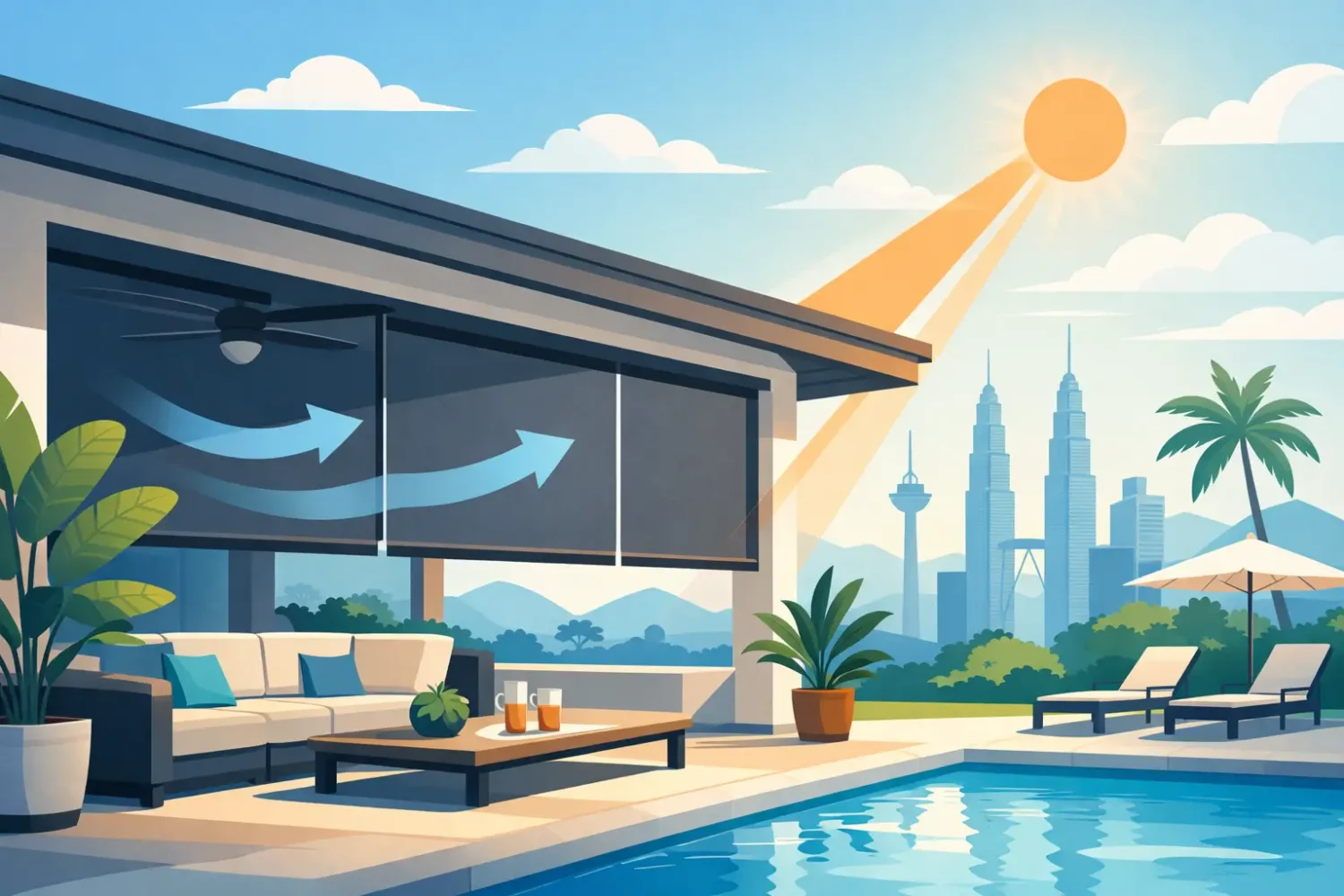
A sunny balcony can become the least-used part of a home by noon. A patio that looked perfect during the viewing can feel exposed, hot, and uncomfortable once rain, glare, and neighboring windows enter the picture. Malaysia outdoor blinds change that equation by turning open edges into controllable living space without closing off the architecture.
For homeowners, this can mean a cooler terrace, a more private balcony, or an outdoor dining area that stays inviting later into the day. For architects, designers, hospitality operators, and developers, it is a practical way to add comfort and usable square footage while preserving a clean contemporary facade.
Why outdoor shading matters in Malaysia
Malaysia’s heat is not only about high temperatures. Direct sun striking glass, walls, decking, and outdoor furniture builds up heat fast. Add humidity, sudden rain, wind-driven dust, and insects, and an uncovered patio becomes difficult to enjoy consistently.
A well-chosen outdoor blind stops much of that discomfort before it reaches the room or seating area. The system creates a shade barrier at the perimeter, helping reduce glare and solar heat while providing a more protected setting for coffee, family meals, work calls, or entertaining. It also gives homeowners control: open the view when the weather is pleasant, lower the blind when the sun becomes harsh, and create privacy in seconds.
The visual difference matters as much as the functional one. Outdoor shading gives balconies and patios a finished architectural frame. Rather than looking like an exposed add-on, the area feels intentional, furnished, and ready to use.
Malaysia outdoor blinds for each outdoor condition
There is no single outdoor blind that suits every opening. The correct system depends on exposure, opening width, wind conditions, desired privacy, and whether the priority is sun control, rain resistance, insect protection, or all of them together.
Zipguide blinds for enclosed comfort
Outdoor Zipguide blinds are a strong choice for balconies, patios, gazebos, and pergola edges where homeowners want a more complete barrier. The fabric is held within side channels, creating a taut, guided panel with fewer side gaps than a free-hanging blind.
This design makes Zipguide systems especially effective when the goal is to reduce sun glare, light rain spray, dust, and insects while maintaining an outward view through selected screen fabrics. For high-rise balconies and exposed landed-home patios, the guided construction also creates a neater, more stable appearance than a standard roller blind.
The trade-off is that a guided system needs accurate site measurement and suitable mounting surfaces. It is not a product to estimate by eye. Recess depth, beam positions, floor levels, and side-wall alignment all affect how cleanly the blind will operate and seal.
WireGuide blinds for wide, open views
WireGuide outdoor blinds use tensioned guide wires rather than full side channels. They offer a lighter visual profile and can work well where an opening needs shading but a bulky framed edge would interrupt the design.
They are a smart option for covered patios, outdoor cafes, semi-open decks, and certain balcony applications. When raised, the blind keeps the view open. When lowered, it provides practical solar control and a sense of privacy without changing the character of the space.
Because wire-guided systems are more open at the sides, they are generally less suited to applications needing the strongest rain, dust, or insect barrier. They perform best where shade and visual screening are the main objectives, and where the structure already provides some protection from severe weather.
Retractable awnings and pergola shading
When the sun arrives from above rather than from the side, vertical outdoor blinds alone may not solve the problem. Retractable awnings extend overhead coverage for patios, garden seating, shopfronts, and poolside areas. They create instant shade without permanent solid roofing, allowing the space to remain bright and open when the awning is retracted.
Pergola shading systems are suited to larger outdoor rooms that need a more defined luxury finish. Pairing overhead shading with vertical Zipguide or WireGuide blinds creates a far more usable enclosure: shade from above, glare protection from the side, and adjustable privacy around the perimeter.
The right combination depends on how the space is used. A family patio may prioritize rain resistance and mosquito control. A penthouse terrace may prioritize skyline views and a slim modern profile. A restaurant may need repeatable daily operation, consistent appearance across multiple openings, and fabrics that support guest comfort in afternoon sun.
Choose the fabric for the view you want
Fabric selection is where performance and atmosphere meet. Outdoor screen fabrics filter sun while preserving some visibility outward, making them popular for balconies with garden, city, or pool views. They soften harsh light without making the space feel closed in.
More opaque fabrics offer stronger privacy and deeper shading. They are useful when a home faces nearby units, roads, or shared facilities. A darker screen can often improve outward visibility during daylight by reducing reflected glare, while lighter colors can make the facade appear softer and reflect more light. The best choice is not only about color preference. It is about the direction of the sun, the level of privacy needed, and how the fabric will look against the building exterior.
For professional projects, consistency is essential. Choosing a coordinated fabric color across balcony stacks, terrace openings, or hospitality zones creates a more disciplined facade and avoids the patchwork appearance that can result from unplanned individual upgrades.
Manual or motorized operation?
A manual outdoor blind can be a cost-effective answer for smaller, easily reached openings. It is straightforward, dependable, and appropriate where the blind will be adjusted occasionally rather than several times a day.
Motorization becomes far more valuable when openings are tall, wide, difficult to access, or used frequently. One touch can lower several blinds before the afternoon heat builds up or raise them fully for an evening gathering. This is particularly useful for double-volume patios, high-rise balconies, glass-roof spaces, and commercial areas where staff should not need to operate each blind by hand.
Smart control adds another layer of convenience. Homeowners can organize blinds by zone, while project managers can specify a uniform control approach across multiple units or rooms. Automation should serve the space, not complicate it. A simple wall switch, remote, or grouped control is often the most practical starting point.
Details that determine long-term performance
The best outdoor blind is only as good as its installation. Outdoor environments place constant demands on brackets, guide systems, fabric tension, and mounting points. A system must be specified for the opening rather than treated as a decorative afterthought.
Before choosing a model, consider these four realities:
- Sun direction: West-facing areas usually need stronger afternoon glare control than shaded morning-facing openings.
- Wind exposure: High floors, coastal properties, and open gardens may require a more secure guided system and careful operating guidance during severe conditions.
- Water path: Outdoor blinds can reduce rain intrusion, but they do not replace properly designed roofing, drainage, or waterproofing.
- Structure: Concrete beams, steel frames, ceiling clearance, side supports, and uneven floors all influence the final system and finish.
This is why professional measurement matters. A few millimeters can affect guide alignment, bottom-bar contact, and whether the blind sits cleanly against the opening. For designers and developers, early coordination prevents clashes with lighting, ceiling fans, sliding doors, drainage pipes, and pergola structure.
A better way to use balconies and patios
Outdoor blinds are not meant to make a home feel shut away. Their purpose is to give residents the option to enjoy an open-air space on their terms. Lower them to block the burning late-day sun. Keep them partially open to soften glare without losing the view. Raise them completely when the weather is right.
Smart Curtain Malaysia approaches outdoor shading as part of the architecture, not as an accessory added after discomfort becomes unavoidable. Whether the project needs Zipguide protection, a lighter WireGuide screen, a retractable awning, or a layered pergola solution, the strongest result comes from matching the system to the real conditions of the site.
A well-shaded outdoor space changes daily habits. It becomes the place where breakfast lasts longer, children can play without harsh glare, guests stay after sunset, and a once-unused balcony finally earns its place in the home.