

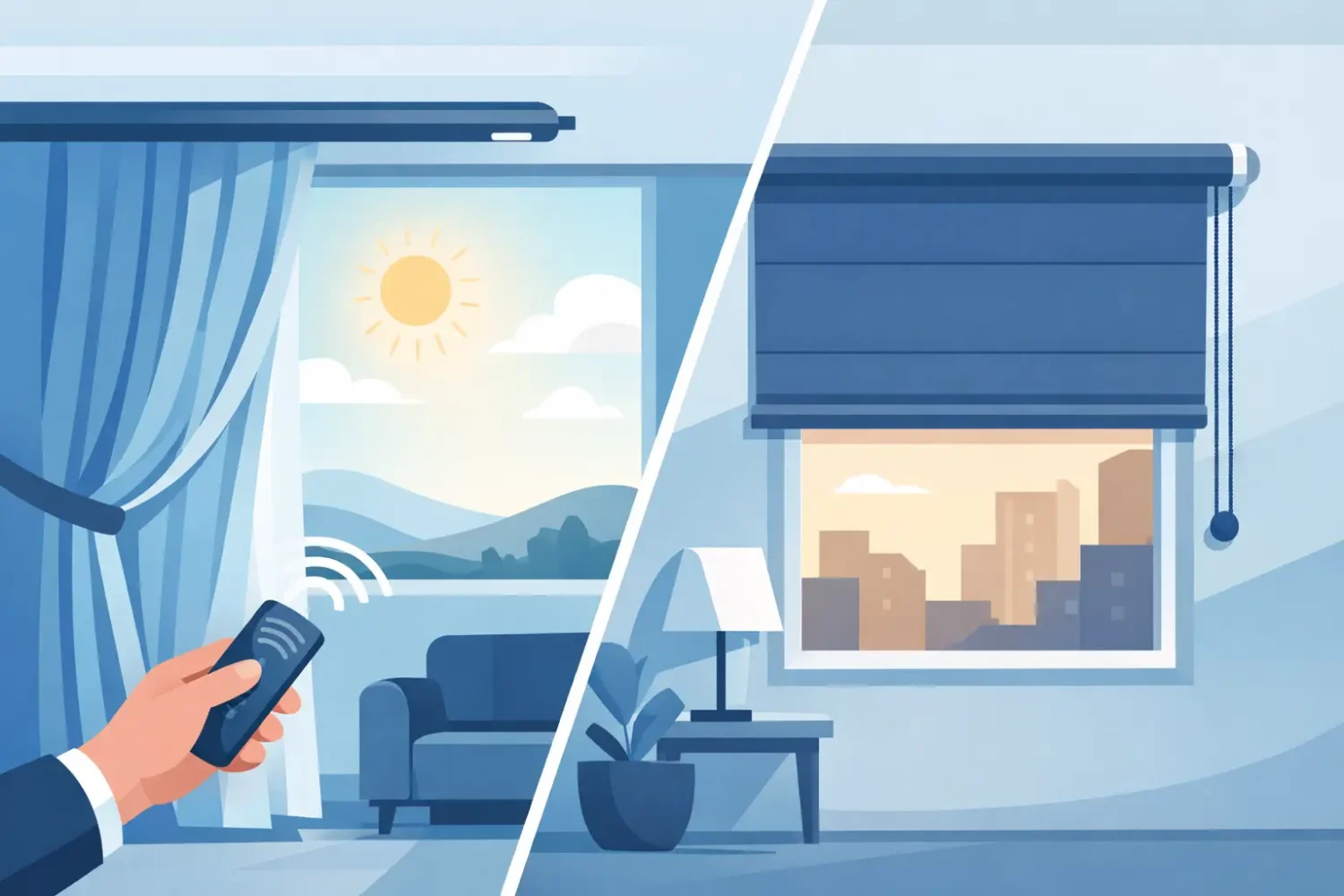
A wall of glass can make a home feel spectacular at noon and uncomfortable by 2 p.m. The real decision in motorized curtains versus roller blinds is not simply fabric versus fabric. It is about how a room handles glare, heat, privacy, ceiling height, and the daily experience of opening and closing a view.
Both systems can create a polished, automated interior. Both can be operated by remote control, wall switch, timer, or smart-home command. Yet they solve different architectural problems. Motorized curtains bring softness, drama, and broad coverage to large openings, while roller blinds deliver a crisp, space-efficient answer for direct sunlight and clean-lined windows.
Motorized Curtains Versus Roller Blinds: The Core Difference
Motorized curtains move horizontally along a track. They are designed to frame wide windows, sliding doors, corner glazing, and full-height façades with a generous, tailored finish. When opened, they stack to the side. When closed, they create a continuous layer of privacy, light control, and visual warmth.
Roller blinds move vertically, rolling into a compact top tube when raised. Their minimal profile makes them especially effective for individual windows, narrow openings, offices, kitchens, and rooms where a clean architectural line matters. Depending on the fabric selected, they can filter daylight, reduce glare, provide near-blackout coverage, or protect interiors from harsh sun while preserving an outward view.
The best choice depends on what the room needs most. If the priority is a luxurious full-window statement and effortless operation across a broad span, motorized curtains are often the stronger choice. If the priority is precision, compactness, and practical solar control, roller blinds can be the smarter system.
When Motorized Curtains Make the Bigger Impact
Motorized curtains are made for windows that deserve more than a basic covering. In a living room with double-height glass, a master bedroom with wide sliding doors, or a penthouse facing a city skyline, curtains add depth that a flat blind cannot replicate. Their folds soften hard finishes such as stone, glass, concrete, and metal, making contemporary interiors feel more complete.
Automation becomes especially valuable as curtain size increases. A heavy blackout curtain across a long track is inconvenient to pull by hand every morning and evening. A motorized track handles that movement quietly and consistently, making it easy to close the room against afternoon heat or create instant privacy after dark. For tall or hard-to-reach windows, automation is not an indulgence. It is the practical way to make the window treatment usable.
Curtains also offer exceptional flexibility through layering. A sheer fabric can diffuse bright daylight and maintain a soft connection to the outdoors, while a separate blackout curtain provides darkness for sleep, movie viewing, or privacy. This dual-curtain approach works beautifully in bedrooms, hotel suites, and premium living spaces where the atmosphere changes throughout the day.
There is a trade-off. Curtains require room for tracks, stacking, and fabric fullness. They are not the most compact option for a shallow window recess or a tight kitchen window. Their finished look also depends heavily on correct track placement, fabric selection, and installation. A well-designed curtain system looks effortless precisely because the planning behind it is precise.
Best spaces for motorized curtains
Motorized curtains are particularly effective for large living rooms, bedrooms, sliding glass doors, double-volume areas, home theaters, and hospitality spaces. They also suit homeowners who want a softer, more luxurious finish without giving up the convenience of smart control.
For blackout performance, attention to track design matters. A curtain that stops short of the wall or leaves large side gaps will allow light to enter. Ceiling-mounted tracks, sufficient fabric overlap, and carefully planned returns create a more convincing blackout effect than fabric alone.
Where Roller Blinds Win
Roller blinds are the direct, disciplined answer to sunlight. Their sleek form sits close to the window, making them ideal when the architecture should remain visually clean. In a study, kitchen, condominium bedroom, or office, a roller blind controls glare without adding visual weight to the room.
Fabric choice drives performance. Sunscreen roller-blind fabrics are excellent where glare and solar heat are concerns but an outside view is still valuable. They diffuse strong light and reduce the intensity of sun on floors, furniture, and screens. Dim-out and blackout fabrics provide greater privacy and darkness, making them suitable for bedrooms, media rooms, and windows facing neighboring properties.
Roller blinds also work well where every inch matters. They do not need side stacking like curtains, and they disappear neatly upward when open. This is a major advantage for windows beside built-in furniture, worktops, or compact layouts where drapery would feel crowded.
Motorization elevates the roller blind from a simple window covering to a responsive shade system. A group of blinds can lower together when afternoon sun reaches the façade, then rise later to reopen the view. This is useful in homes with many windows and in commercial projects where consistent light management affects comfort, screen visibility, and interior appearance.
The limitation is aesthetic as much as functional. A roller blind creates a flatter, more minimal surface. It does not deliver the same softness, fullness, or decorative presence as curtains. For a formal living area or a bedroom designed around warm textures, roller blinds alone can feel too restrained unless they are paired with side drapes or another layered treatment.
Best spaces for roller blinds
Roller blinds are a strong fit for studies, kitchens, bathrooms, offices, compact bedrooms, condominium units, and windows exposed to direct sun. They are also highly effective behind curtains, where they provide discreet solar control or blackout support while the curtain remains the visual feature.
Heat Control Is About Fabric and Coverage
Neither system automatically provides the same level of heat reduction. The result depends on the fabric openness, color, backing, fit, and whether the shade is installed inside or outside the glass. A light-filtering curtain may make a room feel gentler without stopping significant solar heat. A properly selected sunscreen roller blind may reduce glare more effectively while retaining daylight.
For intense sun exposure, the most powerful strategy is often layered control. Use roller blinds to manage direct sunlight during the day, then close curtains at night for privacy, darkness, and a more insulated feeling. This approach gives a room multiple modes instead of forcing one product to do every job.
Exterior shading can be even more effective where sun strikes the glass aggressively, particularly on balconies, patios, and large façades. Indoor curtains and blinds manage comfort beautifully, but stopping heat before it reaches the glass is a different level of performance. That is where specialized outdoor systems become relevant.
Privacy, Blackout, and Everyday Operation
If privacy is the main concern, both products can perform well. Roller blinds offer quick, uniform coverage with a compact finish. Curtains offer fuller side coverage and a more enclosed feeling, especially across wide doors and floor-to-ceiling glazing.
For bedrooms, consider how you use the room at different times. A blackout roller blind is efficient and neat, but small light gaps at the edges may remain depending on the installation. Blackout curtains can cover those gaps more generously, especially when mounted high and wide. The strongest bedroom solution is often a blackout roller blind or blind system combined with decorative or blackout curtains.
Daily habits matter too. If you want the room to look open and expansive in the morning, curtains can stack away to reveal the full width of the window. If you want quick adjustment for a work screen or a changing sun angle, roller blinds offer more controlled positioning. Smart schedules make either option easier to live with, automatically responding to the routines that already shape the household.
Choosing the Right System for Your Project
Choose motorized curtains when the window is a major design feature, when the room needs softness, or when large and heavy fabrics would be difficult to operate manually. Choose roller blinds when direct sun, glare, limited space, and minimal aesthetics lead the brief.
For developers, designers, and hospitality operators, the question should also include repeatability. Roller blinds can create a consistent, efficient finish across many units or workspaces. Motorized curtains can establish a higher-end guest or homeowner experience in key rooms, suites, show units, and premium façades. A mixed specification is often the most intelligent route rather than a compromise.
Smart Curtain Malaysia designs shade systems around the opening, the exposure, and the way the space is actually used. Measure the window, study the sun path, and decide what should happen at morning, midday, evening, and night. The right treatment should not merely cover glass – it should make the entire room more comfortable to live in.