

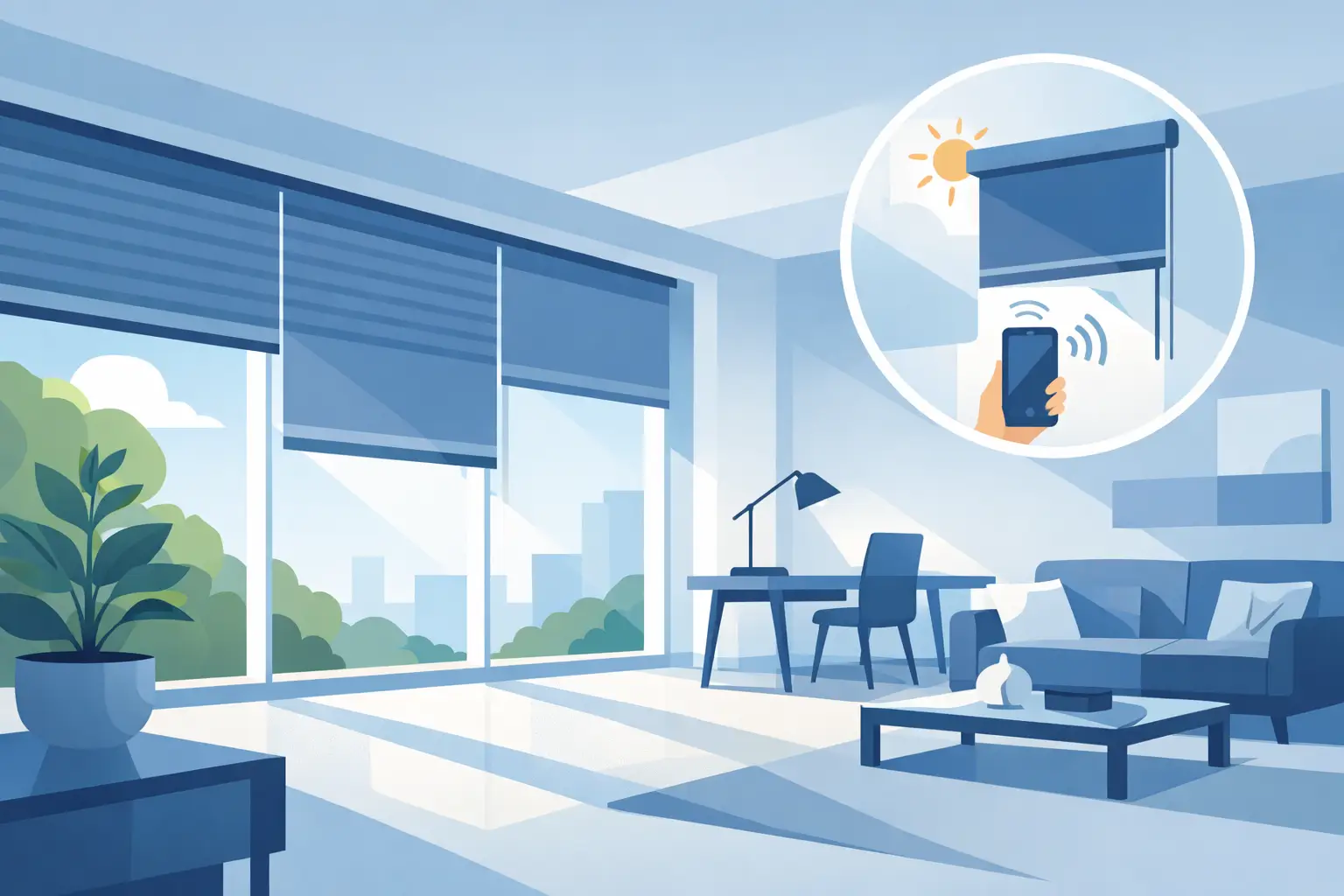
A west-facing living room can look spectacular at 4 p.m. and feel impossible by 4:15. Sun glare washes out the view, heat builds behind the glass, and ordinary curtains become a daily compromise between a dark room and an overheated one. Smart shading changes that equation by giving glass, openings, and outdoor spaces a responsive layer of comfort, privacy, and architectural control.
It is not simply a motorized curtain on a remote. A properly planned smart shading system considers where sunlight enters, how a room is used, whether the glass is reachable, and how much weather exposure an outdoor area receives. The result is a home that feels cooler, calmer, and more refined without filling every window with manual cords and heavy fabric.
Smart Shading Is Designed Around How You Live
The strongest shading projects begin with the problem, not the product. A double-height façade needs a different solution from a bedroom window. A balcony exposed to rain and insects needs more than a blackout blind. A skylight above a stairwell requires reliable operation at a height where manual adjustment is unrealistic.
For interior spaces, motorized curtains and blinds bring everyday control to large windows, tall ceilings, and hard-to-reach openings. With a tap, wall switch, remote, or programmed schedule, the room can shift from bright and open to shaded and private. This is especially valuable in condominiums and landed homes where floor-to-ceiling glass is part of the design but afternoon heat is part of the reality.
The benefit is not automation for its own sake. It is the ability to use daylight with intention. Sheer curtains can soften direct sun while preserving a sense of openness. Blackout curtains can create genuine darkness for bedrooms, media rooms, or shift workers. Roller blinds offer a clean, minimal surface for contemporary interiors, while honeycomb blinds add insulation where heat gain and air-conditioning demand are major concerns.
Control Heat Before It Takes Over the Room
Sunlight is welcome until it becomes glare on a screen, fading on furniture, or a heavy load on the air-conditioning system. Shading reduces the intensity of direct solar exposure before it dominates the interior. The right fabric opacity, blind structure, and placement matter as much as the motor.
For rooms that need filtered daylight, sunscreen roller blinds can reduce glare while maintaining an outward view. For privacy-sensitive rooms, zebra blinds allow a flexible balance between light and screening through alternating fabric bands. For bedrooms and spaces that require stronger darkness, blackout fabrics and curtain systems provide a more decisive barrier.
Honeycomb blinds deserve particular attention in hot climates and heavily glazed rooms. Their cellular construction creates air pockets that help slow heat transfer at the window. They will not replace good glass selection or proper building insulation, but they can make a meaningful difference in spaces where the sun strikes for hours each day.
There is always a trade-off. The more a system blocks light and heat, the more it may reduce views and daylight. That is why a layered arrangement often works best: a sheer or sunscreen layer for daytime comfort, paired with a blackout curtain for nighttime privacy and deeper light control. This approach gives a room more than one setting instead of forcing one fabric to do every job.
Motorization Makes Large Glass Practical
Oversized curtains and high windows are often left in one position because operating them manually is inconvenient. That wastes the potential of the shading system. Motorization turns an architectural feature into something that can be adjusted throughout the day.
In a living area, curtains can close during the hottest sun hours and open again in the evening. In a bedroom, blackout curtains can be programmed around sleep routines. In a high-rise unit, a single command can manage several window zones without walking from room to room.
For a polished finish, the track, fabric drop, stack-back space, and power planning should be considered early. A beautiful motorized curtain can still look wrong if there is not enough side space for the fabric to collect, or if the track placement ignores ceiling details. Smart Curtain Malaysia approaches these decisions as part of the full shade system, not as an afterthought after the renovation is complete.
Smart Shading Beyond the Window
Some of the most demanding spaces are not inside the home. Balconies, patios, pergolas, roof terraces, and glass-roof extensions receive sun from changing angles and face rain, wind, dust, and insects. Conventional indoor blinds are not designed for that environment.
Outdoor Zipguide blinds are a powerful answer for exposed openings. The fabric is guided and tensioned within side channels, creating a more stable screen than a loose-hanging blind. Depending on the selected material and installation, the system can reduce sun glare, provide daytime privacy, help control wind-driven dust, and make an outdoor living area more comfortable for longer hours.
For homeowners who want a flexible outdoor zone, the appeal is immediate. A patio can remain open when the weather is pleasant, then become shaded and more protected when afternoon sun arrives. A balcony can feel less exposed without losing its connection to the view. In hospitality settings, outdoor dining areas gain a more controlled atmosphere without permanent walls.
WireGuide outdoor blinds offer another practical format where guided support is needed but the installation conditions call for a lighter visual approach. Retractable awnings are ideal when overhead shade is the priority, especially for patios and storefront-style terraces. Pergolux shading adds structure and visual impact, turning open exterior areas into designed destinations for entertaining, dining, or quiet evenings.
No outdoor product should be selected on appearance alone. Wind exposure, fixing points, drainage, dimensions, fabric choice, and local weather patterns all affect long-term performance. A system that looks excellent on a sheltered patio may not be suitable for a high-rise balcony or a fully exposed roof deck. Correct measurement and professional installation are what turn an outdoor shade into a dependable part of the property.
Skylights and Glass Roofs Need Their Own Strategy
A skylight brings drama to an interior, but it can also turn a bright room into a heat trap. Glass roofs, atriums, and roof-window openings receive direct overhead light, often when residents have the least practical way to control it. This is where ceiling blinds, skylight systems, and roof-window shading become essential rather than optional.
The right system follows the plane of the glass and remains taut across the opening. It must be sized and guided correctly to avoid sagging, uneven coverage, or difficult operation. Motorization is particularly valuable here because ceiling-level shading is rarely convenient to handle manually.
Think about how the space changes across the year. A glass-roof family area may need bright light in the morning but stronger protection at midday. A motorized roof shading system allows the architecture to remain expressive without asking occupants to tolerate the heat that often comes with it.
Choosing a System That Looks Intentional
Smart shading should support the interior, not compete with it. Fabric texture, color, openness, and hardware finish all influence whether the result feels premium. A minimal roller blind can sharpen a contemporary kitchen. Soft wave curtains can add movement and warmth to a living room. Wooden blinds introduce natural texture where a clean-lined interior needs depth.
Function still leads the decision. Start by identifying the room’s main pressure point: glare, heat, privacy, blackout, weather, insects, or difficult access. Then select the shade format that addresses it. A well-designed project can combine curtain systems, roller blinds, outdoor screens, and skylight shades because each area has a different job to do.
For developers, designers, and contractors, standardizing the right system across repeated unit types can also protect design quality at scale. Clear measurements, color codes, power locations, and installation coordination prevent last-minute substitutions that weaken the final result.
The best time to plan smart shading is while the space is still being designed, when tracks can be concealed, power can be positioned cleanly, and outdoor fixing points can be built into the architecture. When sunlight, privacy, and atmosphere are considered from the start, every window and outdoor opening becomes an asset rather than a problem to cover later.