

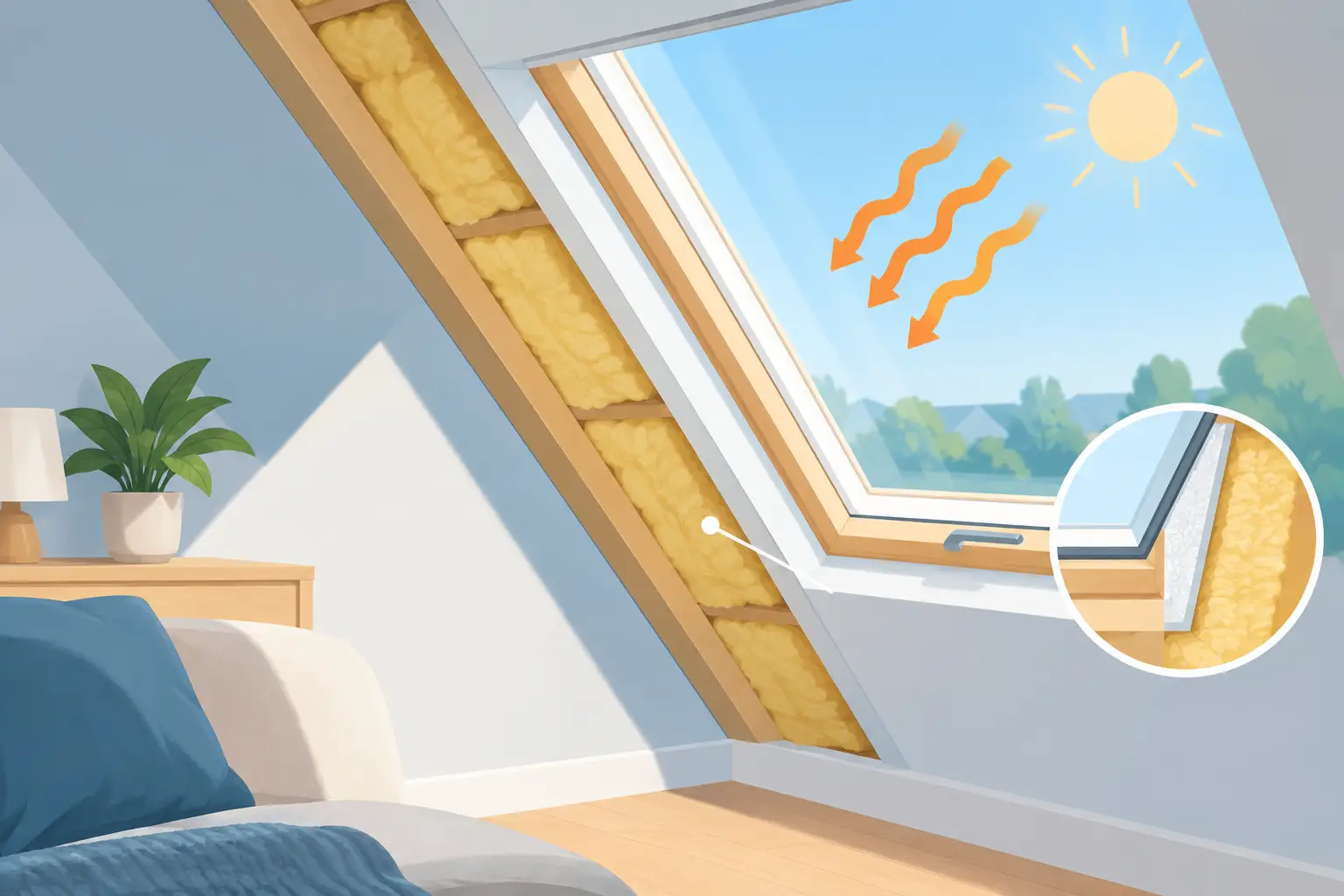
A roof window can turn an ordinary room into the brightest space in the house – then turn it into the hottest by noon. Learning how to insulate roof windows is not about blocking daylight completely. It is about controlling the intense solar heat, glare, and nighttime heat loss that come with overhead glass, while preserving the open, architectural feel that made the window appealing in the first place.
For bedrooms, top-floor living rooms, stairwells, atriums, and glass-roof extensions, the most effective answer is usually a layered one: improve the window itself where necessary, stop air leaks, and add a purpose-designed shading system close to the glass.
Why roof windows need a different insulation strategy
Heat does not behave the same way at a roof window as it does at a vertical window. Overhead glazing receives direct sun for longer periods, often at a steep angle. The glass heats up, radiates warmth into the room, and creates glare precisely where people want to relax, sleep, or work.
At night, the reverse can happen. Glass loses heat faster than an insulated roof assembly, so a room can feel noticeably cooler beneath a skylight or roof window. If the window frame, flashing, or interior trim has gaps, drafts make the problem worse.
A curtain made for a standard wall window rarely solves this well. It may sag, leave exposed edges, or be impractical to reach. Roof-window insulation needs a taut, fitted solution that follows the glass and can be operated easily, even on a high ceiling.
How to insulate roof windows with the right shade
For most existing roof windows, an insulating blind is the fastest high-impact upgrade. The right system creates a thermal buffer between the room and the glass while giving you command over sunlight. The best choice depends on whether your priority is heat reduction, room darkening, visual softness, or all three.
Honeycomb blinds create an insulating air layer
Honeycomb blinds are one of the strongest interior choices for thermal comfort. Their cellular fabric structure traps air in small pockets, creating a barrier that slows heat transfer through the window. In a hot, sun-exposed room, this means less radiant heat entering the space. During cooler evenings, it helps retain conditioned air indoors.
For roof windows, a tensioned honeycomb system is especially effective because it stays neat against angled or overhead glazing. Choose a blackout fabric for bedrooms, nurseries, media rooms, or any space where sleep and glare control matter. A light-filtering fabric is better when you want to soften harsh sun without losing the room’s natural brightness.
The trade-off is simple: darker, more opaque fabrics generally offer stronger light control, but they reduce the daylight that makes roof windows attractive. Many homeowners choose blackout in sleeping zones and light-filtering honeycomb blinds in living areas.
Roller blinds provide clean, direct solar control
A roof-window roller blind gives a crisp, minimal finish and works well with modern interiors. Reflective or heat-control fabrics can reduce glare and cut down on solar gain while maintaining a clean architectural line.
Roller blinds are a practical choice when appearance and straightforward operation are the priority. They do not usually insulate as strongly as cellular honeycomb blinds, because they do not contain air pockets. Still, a fitted roller blind placed close to the glass can make a substantial difference in rooms exposed to direct afternoon sun.
Fabric selection matters. A blackout fabric offers the highest privacy and light blockage. A sunscreen fabric preserves an outside view and daylight but allows more heat and light through than blackout or honeycomb options. For a west-facing roof window, performance should take priority over a wide-open view during the hottest hours.
Ceiling and skylight blinds solve difficult-to-reach glazing
Large skylights, sloped glazing, and glass roofs need systems designed for the geometry. Ceiling blinds and skylight blinds run on guided tracks, keeping the fabric stable across wide spans and angled surfaces. This prevents the loose, uneven appearance that occurs when conventional curtains are adapted to the wrong application.
Motorization is more than a luxury on overhead windows. It makes the insulation usable every day. If a blind is difficult to reach, it is likely to remain open when the sun is strongest. A motorized system lets you close multiple roof-window blinds from a remote, wall switch, or smart control routine before the room overheats.
Smart Curtain Malaysia designs roof-window and ceiling shading systems for precisely these challenging architectural conditions, where conventional window treatments cannot deliver a clean or dependable result.
Start with the window: glass, frames, and air leaks
Shading is powerful, but it cannot compensate for a roof window that is poorly sealed or damaged. Before investing in blinds, inspect the basic window assembly. Look for condensation between panes, cracked seals, warped frames, deteriorated weatherstripping, or staining around the surrounding trim. These can signal failed glazing, air leakage, or water intrusion.
If you feel a draft around the frame, replace worn weatherstripping and make sure the window closes and latches properly. Small gaps can undermine both cooling and heating performance. For operable roof windows, inspect the seal line carefully, since hinges and opening mechanisms create more potential leakage points than fixed glazing.
Older single-pane roof windows are particularly difficult to insulate from the inside. Upgrading to insulated double-pane or low-emissivity glass can dramatically improve comfort. Low-E coatings help manage solar heat and reduce radiant heat transfer, while insulated glazing units provide a better barrier than single glass.
Replacement is a larger investment, so it makes the most sense when the existing window is leaking, fogged, damaged, or due for roof work. If the glass is sound, a fitted blind and refreshed seals are often the smarter first move.
Use exterior shading when solar heat is extreme
Interior blinds intercept heat after sunlight has passed through the glass. They still reduce radiant discomfort and glare, but exterior shading can stop more solar energy before it enters the window system at all.
This approach is especially valuable for glass roofs, sunrooms, and roof windows with relentless direct exposure. Exterior screens, awnings, or purpose-built roof shading reduce the load on air conditioning and make the room more usable during the hottest part of the day. They also protect interior furnishings from harsh UV exposure.
Exterior systems must be specified for wind, rain, drainage, and the roof-window structure. A product that works beautifully on a vertical patio opening may not be suitable for an overhead installation. This is where professional measurement and installation matter: the wrong tension, fixing method, or fabric can compromise both performance and appearance.
Small details that improve roof-window insulation
A few supporting decisions can improve the result without making the room feel closed in. Keep roof-window blinds as close to the glazing as the system allows, because large gaps let warm air circulate behind the fabric. Use side guides or tensioned tracks to limit light leaks and hold the shade securely in place.
If the room has several roof windows, treat them as a group. Leaving one large skylight uncovered can continue to feed heat into the space, even if the others are shaded. For open-plan rooms, separate zones may need different settings: blackout above a TV area, light-filtering control over a dining space, and full closure over a bedroom.
Automation adds another practical layer. Schedule blinds to close before peak sun reaches the roof, then reopen when glare has passed. This prevents heat buildup instead of asking your cooling system to remove it afterward. A sun sensor can be worthwhile for homes that receive intense, shifting exposure throughout the day.
Avoid common roof-window insulation mistakes
The cheapest option is not always the most economical. Adhesive films, foil products, and improvised fabric covers can interfere with the window’s appearance, trap moisture, or create maintenance problems. Some films may also affect glass warranties or add uneven thermal stress, particularly on certain insulated glazing units. Confirm compatibility with the window manufacturer before applying anything directly to the glass.
Another mistake is choosing a standard curtain because it matches the décor. On an angled roof window, it may hang away from the glazing and allow heat to circulate freely. A guided blind system costs more than a simple curtain, but it delivers the fitted coverage, stability, and daily convenience that overhead glass demands.
Finally, do not expect one feature to solve every issue. Insulation is strongest when good glazing, intact seals, fitted shading, and sensible automation work together. The correct mix depends on window orientation, glass size, room use, ceiling height, and whether your main concern is daytime heat, glare, or nighttime comfort.
A roof window should bring drama, daylight, and a sense of space – not a daily battle with heat. Start by identifying when the room feels uncomfortable, then choose a fitted shading system that gives you control at exactly that moment. That is how overhead glazing stays a design feature worth enjoying.