

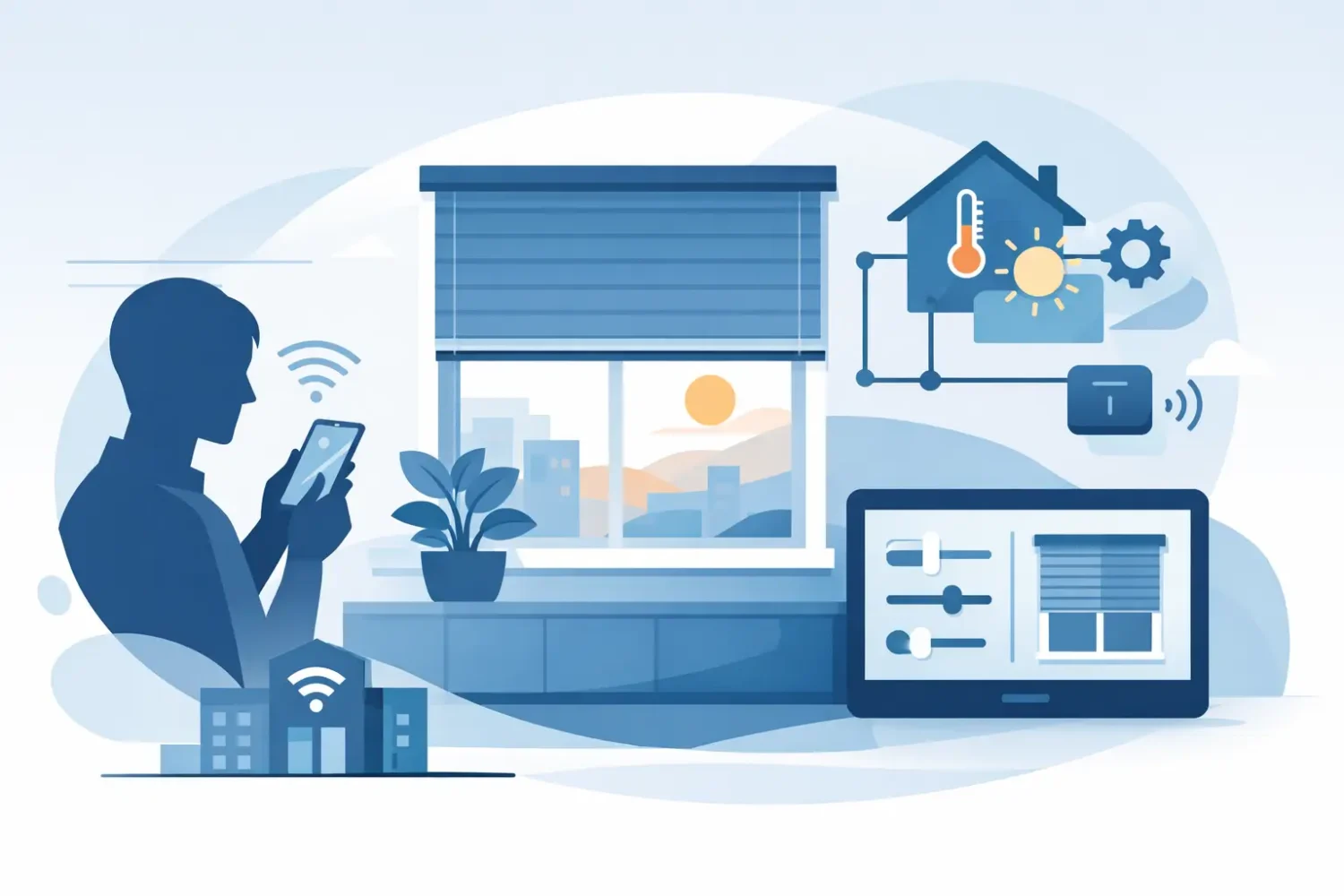
A west-facing glass wall can turn a beautiful living room into the hottest room in the house by midafternoon. A skylight can flood a stairwell with light, then make it impossible to cool. A balcony can look impressive on a floor plan yet sit unused because of glare, rain, dust, or insects. Building automation trends are changing these everyday design problems from permanent compromises into controllable conditions.
For homeowners, architects, interior designers, and developers, the shift is not simply about opening curtains by phone. The most valuable systems connect shading to the way a space is actually used: when the sun is strongest, when privacy matters, when an outdoor area needs protection, and when a tall or difficult-to-reach window must remain practical.
Building Automation Trends That Put Shading First
Automation once focused mainly on lighting, air conditioning, and security. Those systems still matter, but window coverings are increasingly becoming a central part of building comfort. They sit directly between the interior and the sun, making them one of the fastest ways to manage heat gain, glare, privacy, and ambiance without changing the architecture.
The strongest trend is purposeful automation. Instead of adding motors because they feel premium, owners are selecting motorized curtains, roller blinds, outdoor blinds, and skylight shades because manual operation is unrealistic at scale. A double-volume window may require a long curtain drop. A glass-roof space may need daily shade adjustments. An exposed patio may need fast protection when weather changes. In these conditions, automation is a functional upgrade, not a novelty.
This is especially relevant for modern homes with wide sliding doors, full-height glazing, double-volume lounges, and open-plan living spaces. The more glass a project uses, the more essential effective shading becomes. Smart control gives the property a polished, high-end feel, but the real value is a room that remains usable throughout the day.
Scheduled light control is replacing manual routines
Timed schedules are one of the most practical features in smart shading. Curtains can open gradually in the morning, close before afternoon sun reaches a room, and provide privacy before evening. This creates a predictable daily rhythm without requiring anyone to adjust every window manually.
Schedules work particularly well in bedrooms, condominium living rooms, offices, hotel rooms, and show units. Blackout curtains can support better rest, while sheer curtains filter daylight without closing a room off from its view. The right setup depends on orientation, glazing size, and how the room is occupied. A bright east-facing bedroom needs a different strategy than a west-facing family room.
For development projects, repeatable scheduling also makes a unit feel considered from the first handover. The owner does not have to learn a complicated system to enjoy the benefit.
Voice, app, and remote control should stay simple
App and voice control attract attention, but they should never make a shade system harder to use. A wall switch or remote remains essential for many households, especially for guests, children, and family members who want an immediate control point. The best building automation is intuitive enough that every person in the space understands it.
For this reason, smart shades should offer layers of control rather than depend on one method. A user may operate bedroom curtains from a remote at night, use a phone when away from home, and rely on a preset scene for entertaining. The system should make these choices easy, not force the owner into a technical routine.
There is also a practical trade-off. More connected features can provide greater flexibility, but they require proper setup, dependable power, and clear handover instructions. A simpler motorized system may be the better choice for a rental property or a project where reliable daily operation matters more than extensive customization.
Comfort Automation Is Becoming a Design Decision
The next generation of luxury interiors is measured by how a space feels at 2 p.m., not just how it photographs at 8 a.m. Automated shading supports that standard by controlling direct sun before it overheats furniture, floors, and occupied areas.
A layered indoor solution often produces the best result. Sheer motorized curtains soften harsh daylight and preserve an airy look. Blackout curtains create privacy and darkness when required. Roller, zebra, honeycomb, or wooden blinds can add a more structured window treatment depending on the desired aesthetic and performance needs.
Honeycomb blinds deserve attention where insulation is a priority. Their cellular construction helps create a buffer at the window, which can be valuable in rooms exposed to sustained heat. Roller blinds offer a clean, architectural profile for offices and contemporary residences. Zebra blinds allow flexible transitions between filtered light and privacy. No single format is automatically best. The window shape, facade exposure, interior style, and intended use should guide the choice.
Skylights and high windows are no longer ignored
Skylights, roof windows, and high-level glass are among the clearest examples of where automation has become necessary. These areas deliver dramatic daylight and architectural character, but manual shading is often inconvenient or impossible. Leaving them unshaded can create glare, heat buildup, and a difficult cleaning or maintenance situation.
Motorized skylight systems, ceiling blinds, and roof-window shades bring control to these challenging surfaces. They can be set to close during the hottest part of the day and open when softer light is desired. In atriums, stairwells, glass extensions, and double-volume rooms, this allows architects to keep the visual impact of glass without accepting constant discomfort.
Early planning matters. The best time to consider wiring, curtain pockets, track placement, side channels, and control locations is before ceilings and finishes are completed. Retrofitting is possible in many cases, but early coordination produces a cleaner result and gives the system more options.
Outdoor Automation Extends the Living Space
One of the most visible building automation trends is the move to treat balconies, patios, pergolas, and glass-roof terraces as real living areas. Outdoor spaces are no longer decorative extras. Owners expect to dine, work, relax, and entertain outside with better control over sun, rain, privacy, and insects.
Automated outdoor Zipguide blinds are a powerful answer for exposed openings because the guided fabric stays controlled along the sides. They can reduce low-angle sun and glare while giving a balcony or patio a more enclosed, comfortable feel. WireGuide outdoor blinds offer another option for openings where guided support and a lighter visual structure suit the installation. Retractable awnings and pergola shading provide flexible overhead coverage for outdoor dining and lounge zones.
The correct system depends on the environment. A high-rise balcony has different wind exposure than a landed-home patio. A rain-protected terrace may prioritize privacy and sun filtering, while an open garden area may need stronger weather consideration. Fabric selection, mounting conditions, opening width, and structural support all affect long-term performance.
Automation adds a valuable advantage outdoors: speed. When heat becomes intense or rain begins, a motorized shade can be deployed quickly. That immediacy helps turn a once-avoidable space into an everyday extension of the home.
Smart Scenes Create Better Rooms, Not More Screens
The most effective automation trend is scene-based control. Rather than operating every treatment individually, an owner can create simple settings matched to real moments. A “movie” scene may close blackout curtains and lower roller blinds. A “morning” scene may open curtains while keeping a sun-facing blind partially lowered. An “outdoor dinner” scene may extend awnings, lower side blinds, and activate integrated lighting where installed.
This approach is especially useful in larger homes, hospitality spaces, and show units with several zones. It also improves consistency. Instead of relying on someone to remember which blinds to close, the setting repeats the preferred configuration every time.
Still, scenes should reflect life in the property rather than technology for technology’s sake. Too many presets create confusion. Three or four clear scenes usually provide more value than a long menu of clever names and rarely used settings.
What to Specify Before Choosing an Automated Shade System
A successful project starts with the architectural question, not the motor selection. First, identify what must be controlled: direct heat, glare, privacy, blackout, rain, insects, or visibility from neighboring buildings. Then examine the opening itself, including width, height, orientation, access, and exposure.
For professionals, this means coordinating shading with electrical planning, ceiling details, facade conditions, and interior finishes. For homeowners, it means measuring accurately and sharing clear photos of the opening, especially for skylights, balconies, curved tracks, or unusually tall windows. Color also matters. A dark fabric can create a stronger visual statement, while a lighter fabric may better support a bright, open interior. Performance and appearance should be selected together.
Smart Curtain Malaysia approaches automation as part of the entire shading environment, from elegant motorized curtains inside to weather-conscious systems for balconies, pergolas, and glass-roof spaces. That full-spectrum view is what modern projects need. A smart home is not defined by how many controls it has. It is defined by how naturally it protects comfort, privacy, and the character of every room.