

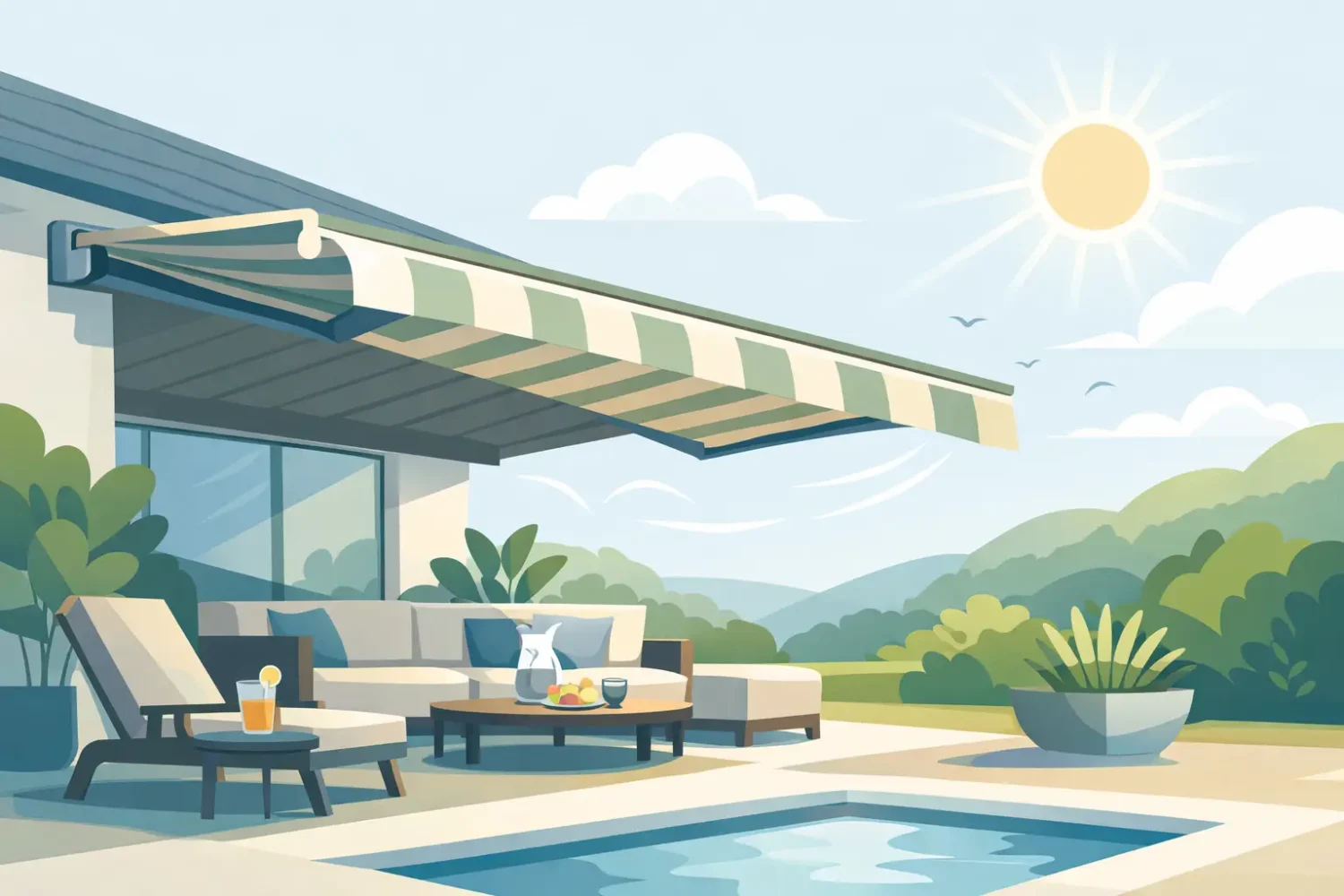
A patio can look beautifully finished and still be too hot to use at noon. A balcony may have a great view but become uncomfortable the moment direct sun hits. Retractable awnings solve that problem with one confident move: extend shade when the weather demands it, then retract the system when you want open sky, daylight, and an unobstructed façade.
For modern homes, condos, cafés, and hospitality spaces, an awning is not simply fabric above a door. It is an architectural shading system that changes how an outdoor area performs throughout the day. It can reduce glare, make seating more comfortable, protect furnishings from harsh sunlight, and give a terrace a more polished, purposeful atmosphere.
Why Retractable Awnings Change an Outdoor Space
Fixed roofs provide permanent coverage, but they also permanently change the character of a space. A retractable awning gives you a choice. Extend it during hot afternoons, pull it back for an evening breeze, or leave it open when you want natural light to reach the interior.
That flexibility matters in homes where the patio connects directly to a living room, kitchen, pool deck, or garden. Rather than closing off the architecture with a heavy permanent structure, the awning creates shade only when it is needed. The result is a cleaner exterior line and a more usable transition between indoors and outdoors.
The comfort gain can be immediate. By intercepting sunlight before it reaches glass doors, outdoor flooring, and seating areas, an awning helps reduce the intense radiant heat that makes exposed spaces difficult to enjoy. It does not replace proper insulation or air conditioning, but it can reduce solar load at the point where it begins: outside the home.
Shade When You Need It, Open Sky When You Do Not
The strongest reason to choose a retractable system is control. Outdoor conditions change quickly, particularly on exposed balconies and west-facing patios. A fixed canopy offers one level of coverage all day. A retractable system allows the space to respond to the moment.
In the morning, you may want sunlight for a brighter breakfast area. By midday, full extension can create a cooler zone for family meals or work. In the evening, retracting the awning restores the view upward and allows a garden, skyline, or architectural lighting to take center stage.
This is also valuable for properties with limited outdoor space. A compact condominium balcony cannot afford a bulky structure that makes the area feel lower or darker. Retractable awnings create shade without permanently crowding the balcony. For landed homes, they can define an outdoor lounge or dining zone while preserving the openness of the yard.
The Right Awning Depends on Exposure
Not every patio needs the same system. The best design begins with how sun, wind, rain, and the building itself affect the area.
A north- or east-facing patio may need modest coverage mainly for daytime comfort. A west-facing terrace usually requires more serious sun management because afternoon heat and glare can be severe. Large sliding doors may benefit from a broad awning projection that shades both the outdoor seating zone and the glass behind it.
Wind is the trade-off that deserves careful attention. Retractable awnings are designed for shade, but their suitability in strong wind depends on the model, installation method, width, projection, and the exposure of the property. A high-rise balcony, rooftop terrace, or coastal-facing site may require additional support, wind-sensing automation, or a different outdoor shading solution altogether.
Rain requires the same realistic approach. Many awning fabrics can handle light rain when the system is set at an appropriate pitch, allowing water to run off. They are not a substitute for a fully engineered roof during heavy downpours or standing-water conditions. If all-weather protection is the main priority, a pergola-style shading system, outdoor Zipguide blinds, or a dedicated roof structure may be a better fit.
Manual or Motorized Operation?
A manual crank awning can be a practical choice for a smaller, accessible patio where the system will be adjusted occasionally. It gives homeowners direct control without requiring electrical wiring, and it can suit simple applications with a modest span.
Motorized retractable awnings are the more refined choice for larger installations, frequent use, or hard-to-reach locations. With a motor, extending shade becomes as easy as pressing a remote, wall switch, or smart control. That convenience matters because an awning only improves comfort when people actually use it. If operation feels effortless, the system becomes part of the daily rhythm of the home.
For exposed locations, weather sensors can add another level of protection. A sun sensor can extend the awning when glare becomes intense, while a wind sensor can retract it when conditions become unsuitable. Automation does not remove the need for sensible use, but it adds reassurance for homeowners who may be away from the property when the weather changes.
Fabric and Color Are Performance Decisions
Awning fabric sets the visual tone, but it also affects the feeling beneath the shade. Light neutral colors can keep the structure visually airy and complement contemporary façades. Darker colors often create a stronger sense of depth and can be especially effective against bright glare, though they may make a compact balcony feel more enclosed.
The right choice depends on the surrounding materials. A warm gray or sand-toned fabric can soften stone, timber, and cream exterior walls. Charcoal and black can suit modern homes with aluminum frames, glass railings, or monochrome finishes. Stripes can introduce a resort-inspired character, while solid fabrics usually deliver the most architectural look.
Consider the view from inside as well. The awning will be visible through glass doors and windows, so its color should work with interior flooring, curtains, and furniture. A carefully selected system should look intentional from both sides of the glass.
Installation Quality Determines Daily Performance
An awning can only perform as well as its mounting surface and installation. The wall, beam, or structural fixing point must be assessed properly before the system is specified. This is especially critical for large projections, wide spans, upper-floor terraces, and installations on finishes that may conceal the true structural substrate.
Accurate measurement is equally important. The awning must cover the usable area rather than simply the width of a door. Consider where chairs pull out, where rain reaches the edge of the patio, and how far the sun travels across the floor at different times of day. A system that is too narrow or too shallow may look neat but leave the most important part of the space exposed.
Professional planning also accounts for door swing, lighting, drainage, exterior fans, security cameras, and nearby blinds. Smart Curtain Malaysia approaches outdoor shade as part of a larger architectural system, helping property owners combine awnings with blinds, curtains, glass-roof shading, and smart controls where the project calls for a complete solution.
Retractable Awnings for Homes and Commercial Projects
At home, retractable awnings can turn an underused patio into a daytime dining area, a shaded play space, or a relaxed outdoor lounge. They are particularly effective over deck seating, poolside areas, courtyard doors, and balcony tables where people gather but cannot stay comfortably under direct sun.
For cafés, restaurants, show units, and hospitality properties, the value is even more visible. Shade increases the number of hours an outdoor table can be used, while a well-chosen awning gives the frontage a more inviting, upscale identity. The system should be specified with commercial use in mind, including its size, operating frequency, exposure, and the visual standards of the property.
Developers and designers can also use awnings to solve a recurring issue in modern projects: glass-heavy architecture that looks impressive but receives intense solar exposure. Used selectively, exterior shading can improve comfort without sacrificing the transparent, open character that made the design appealing in the first place.
Care That Keeps the System Looking Sharp
Retractable awnings do not demand complicated maintenance, but regular care protects their appearance and operation. Retract the system during strong wind and severe weather. Avoid rolling the fabric away when it is heavily wet whenever possible, and allow it to dry after light rain to reduce the risk of mildew or staining.
Clean loose dust and leaves from the fabric and frame periodically. Use a gentle cleaning method recommended for the specific fabric rather than harsh chemicals that may affect its finish. It is also wise to inspect moving arms, brackets, and motorized controls from time to time, especially after a season of frequent use.
The best awning is not the largest one or the most automated one. It is the one designed around your real outdoor habits, your building exposure, and the atmosphere you want to create. When shade is available at the touch of a button, the patio, balcony, or terrace stops being an area you look at from indoors and becomes a place you genuinely use.