

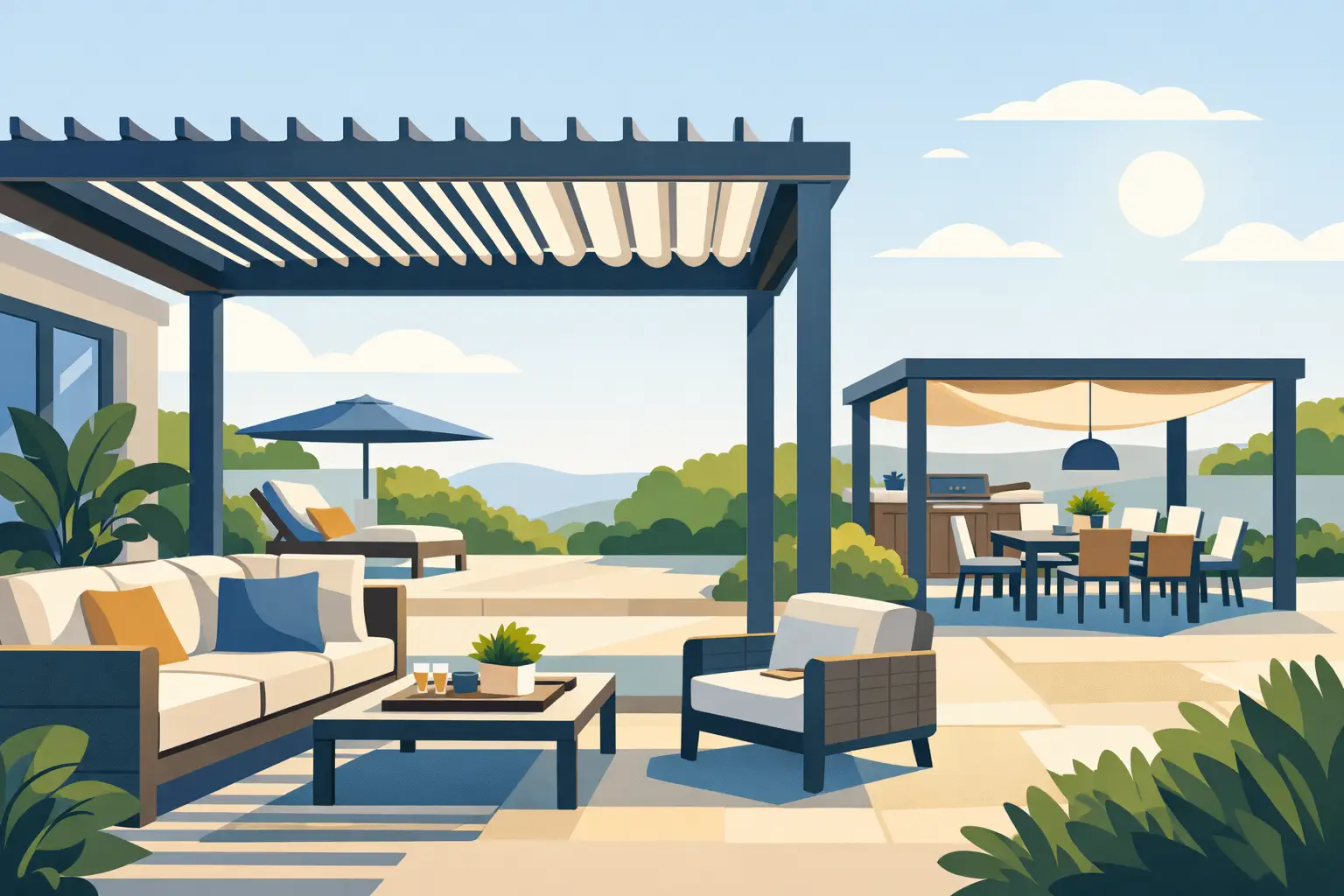
A beautiful pergola can still feel unusable at 2 p.m. when direct sun heats the flooring, glare reaches the dining table, and a light rain sends everyone indoors. The right pergola shades change that equation. They turn an exposed patio, roof deck, garden lounge, or poolside seating area into a space that works longer through the day and across more seasons.
For homeowners, this is about getting more value from an outdoor area without losing its open-air character. For designers, contractors, and hospitality projects, it is a practical way to create a polished transition between architecture and landscape. The best result is not simply more shade. It is controlled light, lower heat, privacy when needed, and a clean system that belongs with the structure.
What Pergola Shades Need to Solve
A pergola is rarely exposed to just one problem. Afternoon heat may be the main concern on one side, while wind-driven rain or overlooking neighbors affect another. Before choosing a system, identify how the space is actually used: breakfast seating, outdoor dining, a children’s play area, a balcony lounge, or a commercial terrace all have different priorities.
Roof shading is the starting point when sunlight falls directly from above. A retractable canopy or pergola roof system reduces solar exposure while preserving the option to open the sky when the weather is pleasant. Side shades answer a different need. They block low-angle sun, add privacy, reduce wind, and help define the room without constructing permanent walls.
That distinction matters. A shade fabric can make a patio far more comfortable, but it should not be presented as a fully waterproof roof unless the system, drainage, pitch, and installation are designed for rain protection. Matching the product to the real exposure produces better comfort and fewer compromises later.
Pergola Shades for the Roof and Sides
Retractable roof systems for flexible overhead cover
A retractable pergola canopy gives an outdoor room its most valuable feature: choice. Extend it when the sun is intense or rain threatens, then retract it to enjoy evening air, stars, and natural daylight. This format suits patios and decks where a fixed roof would make the home feel heavier or darker.
The visual benefit is equally strong. A taut, properly integrated roof shade creates a finished ceiling plane over an outdoor dining table or lounge set. It can make a simple pergola feel like an intentional architectural extension of the home rather than a standalone garden accessory.
For sunny climates, look beyond the fabric color alone. The fabric’s openness, density, and underside appearance influence glare, heat, and the atmosphere below. Lighter shades can keep the space visually airy, while darker tones may offer a stronger view outward but can create a more dramatic look. The right choice depends on orientation, surrounding finishes, and how much daylight the adjoining interior needs.
Outdoor Zipguide blinds for sun, wind, and privacy
When sunlight enters from the sides, outdoor guided blinds are often the most effective answer. Zipguide-style systems hold the fabric securely within side channels, creating a neat vertical screen with fewer gaps. They are ideal for exposed pergola openings, balconies, covered patios, and outdoor kitchens where loose fabric would be distracting in wind.
These shades do more than add privacy. They soften late-afternoon glare, reduce wind across a dining setting, and help keep leaves, dust, and light rain from reaching the seating area. With an appropriate mesh fabric, they can also maintain an outward view and airflow instead of turning the pergola into a closed box.
A more open mesh is excellent when visibility and ventilation come first. A denser fabric gives stronger privacy and solar control, especially where neighboring windows overlook the space. Neither option is universally better. The best specification begins with what the occupants need to see, block, and feel.
Wire-guided shades for open, lighter structures
Wire-guided outdoor blinds provide a streamlined option for pergolas that do not have deep side channels or a heavy frame. Guide wires keep the shade aligned while preserving a lighter visual profile. They work well for smaller openings and spaces where the pergola structure is deliberately minimal.
Because wire-guided systems have a different level of edge sealing and wind control than Zipguide blinds, they should be selected honestly. On a highly exposed rooftop or a wide opening that catches strong wind, a channel-guided system is usually the stronger long-term solution. On a sheltered patio, wire guidance can deliver elegant solar control without overbuilding the design.
Motorization Makes the System Worth Using
A manually operated shade can perform well, but the shade that is easiest to use is the shade people use every day. Motorized pergola shades allow homeowners to respond to changing sun and weather with a remote, wall control, or smart-home routine. That matters for tall pergolas, large spans, and hard-to-reach openings where manual operation becomes inconvenient.
Automation can also support better daily comfort. A roof canopy can extend before the strongest afternoon sun reaches the terrace. Side screens can lower as glare moves across the space. For commercial terraces, consistent operation helps staff prepare an outdoor area quickly instead of adjusting several manual systems one by one.
The most successful smart setup remains simple. Controls should be easy for guests, family members, and maintenance teams to understand. A thoughtful installation also considers access for servicing, protected cable routing, and the location of power before finishes are complete.
Design the Shade System With the Pergola
Pergola shades look premium when they are planned as part of the structure, not added after every other decision has been made. The frame color, fabric tone, cassette size, guide position, and drainage path all affect the final appearance. A well-integrated system should look calm when open and purposeful when closed.
Start with the pergola’s orientation. West-facing spaces usually need serious side protection because late sun enters at a low angle. South-facing areas may need more reliable overhead coverage. Corner pergolas often benefit from a combination of roof shade and screens on two sides, while a poolside pergola may prioritize filtered light, airflow, and visibility.
Measure every opening individually. Outdoor structures are not always perfectly square, and even a small difference can affect how a guided blind tracks or how a retractable roof aligns. Professionals should also account for posts, beams, gutter locations, door swings, outdoor fans, lighting, and furniture placement before finalizing the system.
Choose Materials for Real Outdoor Conditions
Outdoor shade systems live with heat, UV exposure, dust, moisture, and daily movement. Fabric should be selected for solar performance and outdoor durability, not just for a color sample viewed indoors. Frames, guides, and fasteners also need to suit the environment, particularly near pools or coastal areas where corrosion resistance deserves extra attention.
Maintenance is straightforward when the system is specified and installed correctly. Keep guides and tracks free of debris, clean fabric gently according to its care requirements, and avoid forcing a screen if an obstruction is present. After periods of severe weather, a quick inspection of fabric tension, guide alignment, and drainage keeps small issues from becoming expensive repairs.
For projects with multiple units, such as townhomes, hospitality terraces, or condominium common areas, consistency matters. Standardizing fabric selections, control methods, and installation details creates a better visual result and simplifies future maintenance.
A Better Way to Use the Space You Already Have
Pergola shades are not an accessory added at the end of a patio project. They are the comfort system that determines whether an outdoor room is used only on ideal days or enjoyed for breakfast, work calls, family dinners, and relaxed evenings.
Choose the roof system for overhead exposure, the side screen for glare and privacy, and motorization for the moments when comfort should happen at the touch of a button. When the shade system is designed around the way the space is lived in, the pergola stops being a decorative frame and becomes one of the most inviting rooms on the property.