

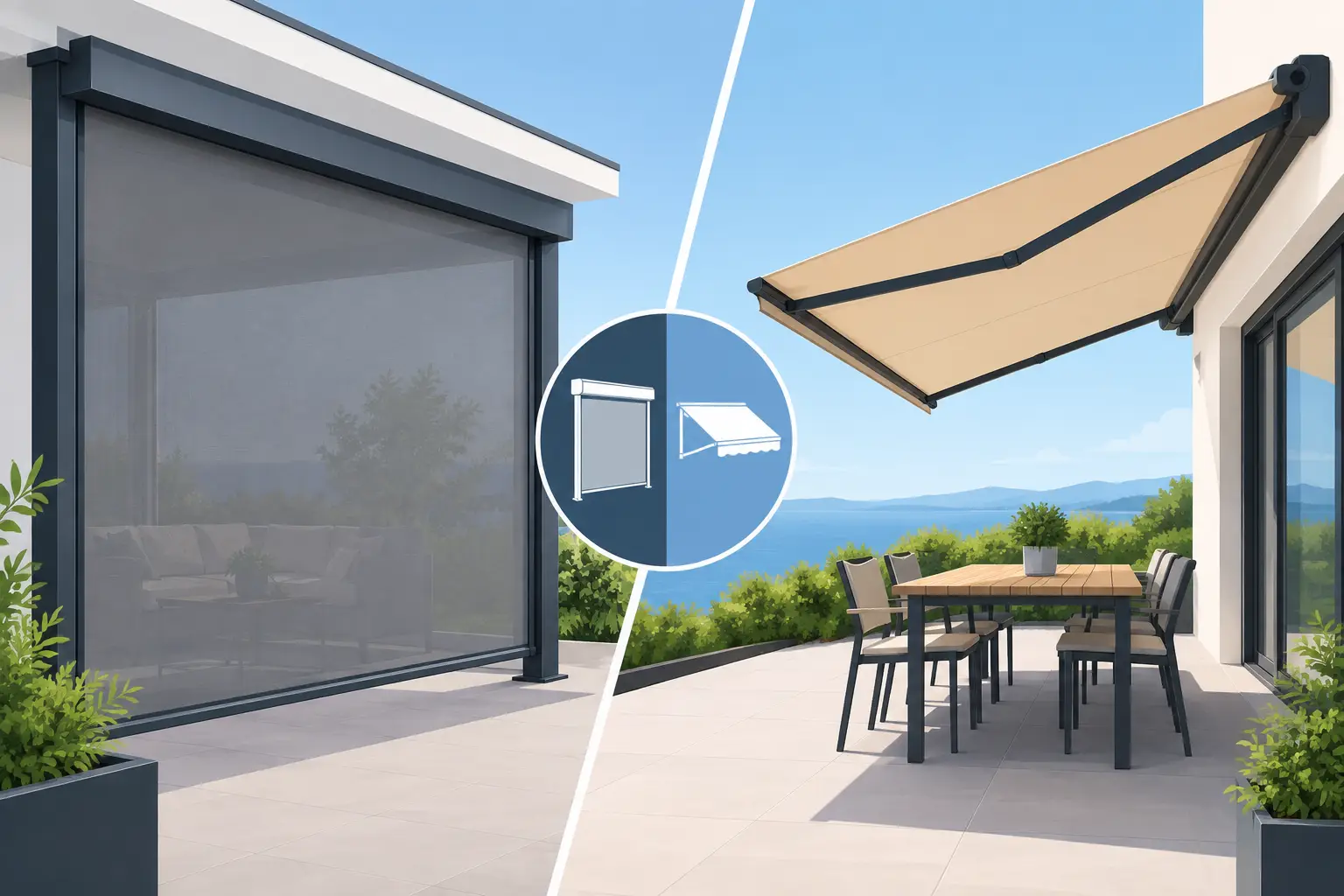
A beautiful patio can become the least-used part of a home when afternoon glare, wind-driven rain, insects, and a lack of privacy take over. The decision between Zipguide blinds versus retractable awnings changes how that space performs every day. One system creates a protected outdoor room; the other creates flexible overhead shade. Both can transform a balcony, terrace, café frontage, or poolside area, but they solve very different problems.
For homeowners and project professionals, the right choice starts with a simple question: are you trying to cover the sun from above, or close off the exposed sides of the space? That answer has a major effect on comfort, architecture, and how often the area can be enjoyed.
Zipguide Blinds Versus Retractable Awnings: The Core Difference
Zipguide blinds are vertical outdoor screens that travel within guided side channels. The fabric is held securely along both edges, creating a taut barrier that can be lowered when heat, glare, rain, wind, insects, or neighboring views become a problem. When raised, the system disappears neatly above the opening.
Retractable awnings extend outward from a wall or supporting structure to provide a roof-like layer of shade. Their main role is to block direct overhead sun before it reaches a patio, window, deck, or outdoor seating area. Extend the awning when the sun is strong, then retract it to restore an open sky and natural light.
Think of an awning as the ceiling of an outdoor living area. Think of a Zipguide blind as its wall. In many high-performance outdoor spaces, the strongest result comes from using both systems together.
When a Retractable Awning Is the Better Answer
A retractable awning is the clear choice when direct sunlight is the primary issue. West-facing patios, outdoor dining areas, pool decks, and terrace doors often receive intense overhead heat that makes the surface below uncomfortable long before the sun reaches the horizon. By stopping solar exposure above the seating area, an awning helps the space feel cooler and reduces glare through adjacent glass doors.
It also gives a home an immediate lifestyle upgrade. A well-proportioned awning creates an inviting shaded zone without the visual weight of a permanent roof. Retracted, it keeps the façade clean and allows sunlight into the interior. Extended, it creates a generous place for weekend meals, children’s play, or relaxed entertaining.
This flexibility matters for homes that do not want to commit to a fixed canopy. During cooler mornings or rainy-season breaks, residents may want full daylight and an uninterrupted view of the sky. A motorized retractable awning makes that shift effortless.
Awnings are especially effective for shallow-to-medium-depth patios where the main exposure comes from above. They can also protect interior furnishings by reducing the amount of direct sun entering through large sliding doors and windows.
However, an awning has limits. It does not close the sides of a patio, so low-angle sun can still penetrate from the east or west. It also does not provide full privacy from adjacent homes, nor does it act as a reliable insect screen. Depending on its fabric, pitch, drainage design, and wind conditions, it may offer only limited protection during rain. In exposed locations, it should be retracted during strong winds unless the selected system is engineered and installed for those conditions.
Where Zipguide Blinds Take Control
Zipguide outdoor blinds are built for spaces that need more than overhead shade. A balcony facing a neighboring tower, a ground-floor patio exposed to passing traffic, or an alfresco dining area affected by low sun all benefit from vertical screening.
The guided edges are what separate this system from a conventional outdoor roller blind. Because the fabric is retained inside side channels, it stays more stable, looks cleaner, and offers better coverage at the edges. This creates a more controlled environment for exposed openings, especially when compared with free-hanging shades that can move excessively in a breeze.
Lower a Zipguide blind in the late afternoon and it cuts harsh side glare while preserving a softer, filtered view outward. Choose a more open screen fabric when visibility and airflow matter, or select a denser fabric when privacy and heat reduction are the priority. For projects requiring stronger light blockage, suitable blackout-oriented options can create a more enclosed, private atmosphere.
This makes Zipguide blinds particularly valuable for condominiums, penthouses, covered balconies, pergolas, and outdoor kitchens. They turn an exposed edge into a flexible boundary. During a bright afternoon, the screen reduces glare. At night, it limits visibility into the space. When insects become a distraction, a properly selected screen can help make outdoor dining more comfortable.
The trade-off is that Zipguide blinds do not replace a roof. If a patio has no cover at all, vertical blinds alone cannot stop midday sun falling directly from above. They may also reduce airflow and outward views when fully lowered, although the right fabric openness can balance these concerns.
Heat Control: Overhead Shade vs. Side Protection
Heat is rarely caused by one direction of sunlight. That is why the best outdoor shading decisions consider the path of the sun throughout the day.
A retractable awning is most effective when the sun is high. It shades the floor, furniture, and people below it, reducing the heat that builds up across the patio surface. This is ideal for midday use and for glass openings that receive top-down exposure.
Zipguide blinds become more valuable as the sun drops lower. The late-day sun often slips under an awning and shines directly into seating areas. A vertical screen blocks this low-angle glare before it reaches the outdoor room or enters the interior through glass doors.
For a west-facing terrace, this difference is decisive. An awning may make lunch comfortable, while Zipguide blinds may be what make dinner possible. A north- or south-facing covered balcony, depending on the building orientation and surrounding structures, may need primarily vertical protection rather than a large overhead projection.
Privacy, Rain, and Wind: Know What Each System Can Do
Privacy is one of the strongest reasons to choose Zipguide blinds. A retractable awning offers visual shelter from above but leaves the sides open. If the concern is a close neighboring property, road-facing patio, or overlooking from another building, a vertical screen provides the more direct solution.
Rain requires more careful expectations. A retractable awning can provide useful light-rain cover when designed with the correct pitch and operated appropriately. But it should not automatically be treated as a permanent waterproof roof. Water management, fabric specification, installation angle, and weather conditions all matter.
Zipguide blinds can help block wind-blown rain coming from the side, particularly on covered patios and pergolas. They are excellent companions to a fixed roof, glass roof, or awning because they close the gaps where rain and spray enter. Yet they are not a substitute for a properly designed overhead rain cover.
Wind is another reason to avoid treating all outdoor shades as interchangeable. Zipguide systems generally provide better fabric stability than un-guided outdoor blinds. Retractable awnings are more exposed when extended, so their use must match the site conditions, mounting structure, projection, and manufacturer guidance. For high-rise balconies and highly exposed corners, professional assessment is not optional.
Design Impact and Day-to-Day Operation
Both systems can look architectural when they are sized and integrated correctly. The wrong choice is usually not about color or style. It is about placing the product where it cannot perform its intended job.
A retractable awning adds a horizontal line that visually expands a patio. It works beautifully with clean façades, contemporary landed homes, restaurant terraces, and poolside entertaining zones. Fabric color can either blend into the exterior or create a deliberate design accent.
Zipguide blinds create a more enclosed, resort-like setting. Raised screens preserve open views; lowered screens give the area a private, tailored feel. Their clean vertical planes suit modern balconies, pergolas, outdoor lounges, and commercial dining spaces where a polished finish matters as much as sun control.
Motorization makes both systems more likely to be used properly. A motorized awning can extend before the patio overheats. Motorized Zipguide blinds can lower at sunset or when privacy is needed, without reaching across furniture or handling heavy manual mechanisms. Smart Curtain Malaysia can coordinate these systems as part of a wider smart shading plan, particularly where outdoor comfort needs to work alongside interior curtains and blinds.
Choose the System That Solves Your Exposure
Choose a retractable awning if your outdoor space is mainly uncomfortable because of direct overhead sun and you want shade that can disappear when not needed. It is the right move for open patios, decks, and seating areas that need an adaptable canopy.
Choose Zipguide blinds if side glare, privacy, insects, wind, or rain spray are the real obstacles. They are the stronger solution for covered balconies, pergolas, patios with existing roofs, and openings that need to function like flexible outdoor walls.
Choose both when you want a true outdoor room. The awning handles the sun overhead, while Zipguide blinds manage the changing conditions at the edges. This combination gives homeowners and hospitality projects more control from midday heat through evening privacy.
Before selecting fabric or automation, stand in the space at the time it is least comfortable. Notice where the sun enters, where rain blows in, what views need screening, and whether the area needs a roof, a wall, or both. The right shade system does more than make an outdoor area look finished – it gives the space a reason to be used.