

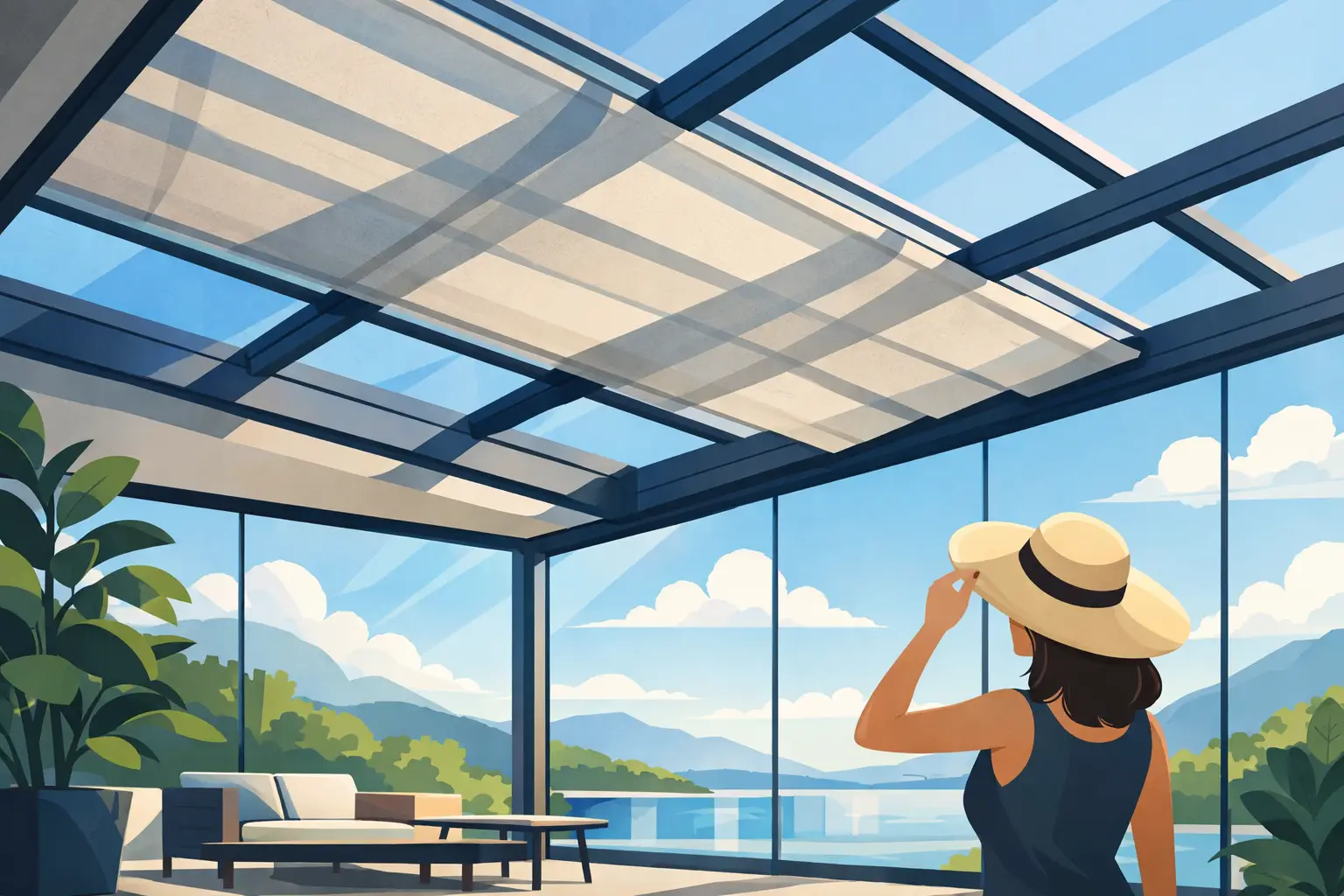
A glass roof can make a space feel larger, brighter, and more architectural – until afternoon sun turns it into the hottest room in the house. Knowing how to shade glass roofs is not about covering up the glass completely. It is about controlling solar heat, glare, and privacy while keeping the daylight and open-sky effect that made the feature worth installing.
For roof glazing above a living room, atrium, enclosed patio, or top-floor space, the right system must do more than look good. It needs to suit the roof angle, span, access height, sun direction, and the way the room is used. A compact internal blind may be perfect for a small skylight, while a large glass extension may need exterior shading and motorized control.
Start With What the Glass Roof Is Really Doing
Glass roofs are not all exposed in the same way. A north-facing roof may provide soft daylight for much of the day, while a west-facing glass extension can receive intense low-angle sun and heat late in the afternoon. A roof above a dining area has different needs than one above a stairwell or indoor garden.
Before choosing a blind or screen, look at when the room becomes uncomfortable. Is the main issue heat buildup, blinding glare, fading furniture, poor privacy from nearby high-rise buildings, or light that wakes you too early? One product does not solve every problem equally well.
The glass itself also matters. Low-E, laminated, tinted, and double-glazed panels can reduce some solar gain, but glazing alone rarely gives you flexible light control. A shading system adds the control the glass cannot provide: open when you want daylight, closed when you need comfort.
Exterior Shading Stops Heat Before It Enters
For severe direct sun, exterior shading is usually the strongest first line of defense. It intercepts sunlight before it reaches the glass surface, reducing the greenhouse effect that makes glazed roofs difficult to enjoy at midday.
A retractable roof awning or purpose-designed external roof shade is particularly effective over conservatory-style roofs, patio glazing, and sloped glass structures. Because the fabric sits outside the glass, less heat is transferred into the interior. Retractability is the major advantage: extend it during harsh sun, then pull it back to enjoy the evening sky or a rainy-day view.
External systems must be selected for the actual site conditions. Wind exposure, roof pitch, drainage paths, fixing points, and fabric tension are not small details. A standard outdoor blind meant for a vertical balcony opening should not be forced onto a sloped glass roof. Roof shading needs guided, tensioned operation so the fabric stays smooth and secure across the glazing.
For projects with broad overhead exposure, a pergola-style shading structure can also create a more complete outdoor-to-indoor transition. It can shade the glass roof and provide a stronger architectural frame for terraces, courtyards, and entertaining areas. This approach uses more space and requires earlier planning, but it can transform an exposed glass extension into a usable all-day zone.
Use Internal Ceiling Blinds for Precision and Style
Internal shading is often the better choice when the glass roof is difficult to access from outside, protected by an overhang, or part of a finished interior where the visual effect matters most. Ceiling blinds and skylight systems are designed to run across overhead or angled glazing rather than hanging loosely like an ordinary roller blind.
A tensioned system keeps the fabric close to the glass and prevents sagging across the span. It gives the ceiling a clean, tailored finish while allowing light to be softened rather than eliminated. Choose a sunscreen fabric when you want daylight with reduced glare, or a denser dim-out or blackout fabric when the room needs stronger control.
Honeycomb blinds are a smart option for rooms where insulation is a priority. Their cellular construction creates an air pocket that helps slow heat transfer through the glass. They are especially useful above bedrooms, media rooms, home offices, and air-conditioned living spaces where both daytime heat and nighttime temperature comfort matter.
Internal blinds do have a trade-off. Because sunlight has already passed through the glass, some heat has entered the roof zone before the shade blocks it. They remain highly effective for glare, visual comfort, and privacy, but an extremely hot west-facing roof may benefit from an exterior solution as well.
How to Shade Glass Roofs With the Right Fabric
Fabric selection determines how the room feels when the system is closed. Do not choose only by color. A light-colored fabric can reflect heat and maintain a brighter interior, while a darker fabric may provide better outward visibility through a sunscreen weave during daylight. Openness factor matters too: a more open weave preserves a connection to the view but admits more light, while a tighter weave offers greater protection and privacy.
For a glass roof above a lounge or kitchen, a solar screen fabric is often the balanced choice. It cuts glare on screens and dining surfaces without making the room feel shut down. For a bedroom skylight, a blackout or near-blackout roof blind is more appropriate, especially where early sunrise is disruptive.
Consider the finish from both sides. Overhead shading becomes part of the ceiling plane, so its color should work with the walls, flooring, metal frames, and lighting. Neutral tones create a quiet architectural look, while warmer fabric colors can make a large glass-roof space feel more inviting after sunset.
Motorization Is Essential for High or Wide Roofs
A glass roof is often the least convenient window in the building. It may sit over a double-height living room, stairwell, or inaccessible ceiling void. Manual operation is fine only for small, low, easily reached roof windows. For larger or elevated glazing, motorized control is the practical standard.
With a motorized roof blind, you can adjust light without climbing, using a wall switch, remote, or smart control. More importantly, automation lets the shade respond to daily conditions. Schedule it to close before the strongest afternoon sun reaches the glass, open in the morning for daylight, or operate as part of a scene that adjusts curtains, lighting, and blinds together.
This is where a well-designed system changes everyday comfort. Instead of waiting until the room is already overheated, the shade works ahead of the sun. Smart Curtain Malaysia designs integrated shading around this kind of real-world use, where difficult roof glazing needs to feel effortless rather than high-maintenance.
Match the System to the Room, Not Just the Roof
The most successful installations consider the entire envelope around the glass roof. If sunlight also enters through large side windows, shading the roof alone may not solve the heat problem. Pairing overhead blinds with motorized curtains, roller blinds, or exterior vertical screens can create a layered barrier against glare and solar gain.
For an enclosed patio or glass sunroom, use roof shading overhead and guided outdoor blinds at the open sides. The roof system controls direct overhead sun, while side screens help reduce low-angle glare, wind-blown rain, insects, and loss of privacy. This combination makes the space more useful from morning through evening.
In a double-volume interior, a ceiling blind can soften overhead light while full-height curtains or roller shades manage the façade. The result is more than heat control. It gives the room a deliberate, finished atmosphere instead of leaving a large glass structure visually exposed.
Plan the Installation Before the Finishes Are Complete
The best time to specify glass-roof shading is before construction or renovation is finished. This allows the installer to confirm mounting surfaces, recess dimensions, electrical supply for motors, cable routing, and access for future servicing. Trying to add a system after ceilings, plaster, lighting, and glass frames are complete can limit the available options.
For an existing property, accurate measurement becomes even more critical. Glass roof spans can vary, frames may not be perfectly square, and angled structures need custom guidance and fixing positions. A professional site assessment should confirm the usable width, drop, slope, obstructions, motor location, and the weight the support structure can carry.
Ask these practical questions before approving a system:
- Does the roof face the strongest morning, midday, or afternoon sun?
- Is the main goal heat reduction, glare control, privacy, blackout, or all four?
- Will the shade be installed inside the glass, outside it, or in layers?
- Can the system be motorized and serviced safely at its installed height?
- Does the chosen fabric suit the room’s light level, décor, and cleaning needs?
Keep the Glass Roof Comfortable, Not Closed Off
The wrong approach is treating a glass roof like a problem to hide. Heavy, fixed coverings may reduce heat, but they can also erase the daylight, height, and visual drama that define the space. The better approach is flexible shading that gives you control hour by hour.
Choose exterior protection when solar exposure is extreme, internal ceiling or honeycomb blinds when insulation and interior refinement lead the brief, and motorization when the glass sits beyond easy reach. With the right roof-window system, the brightest part of the home can stay bright, calm, and comfortable enough to enjoy every day.