

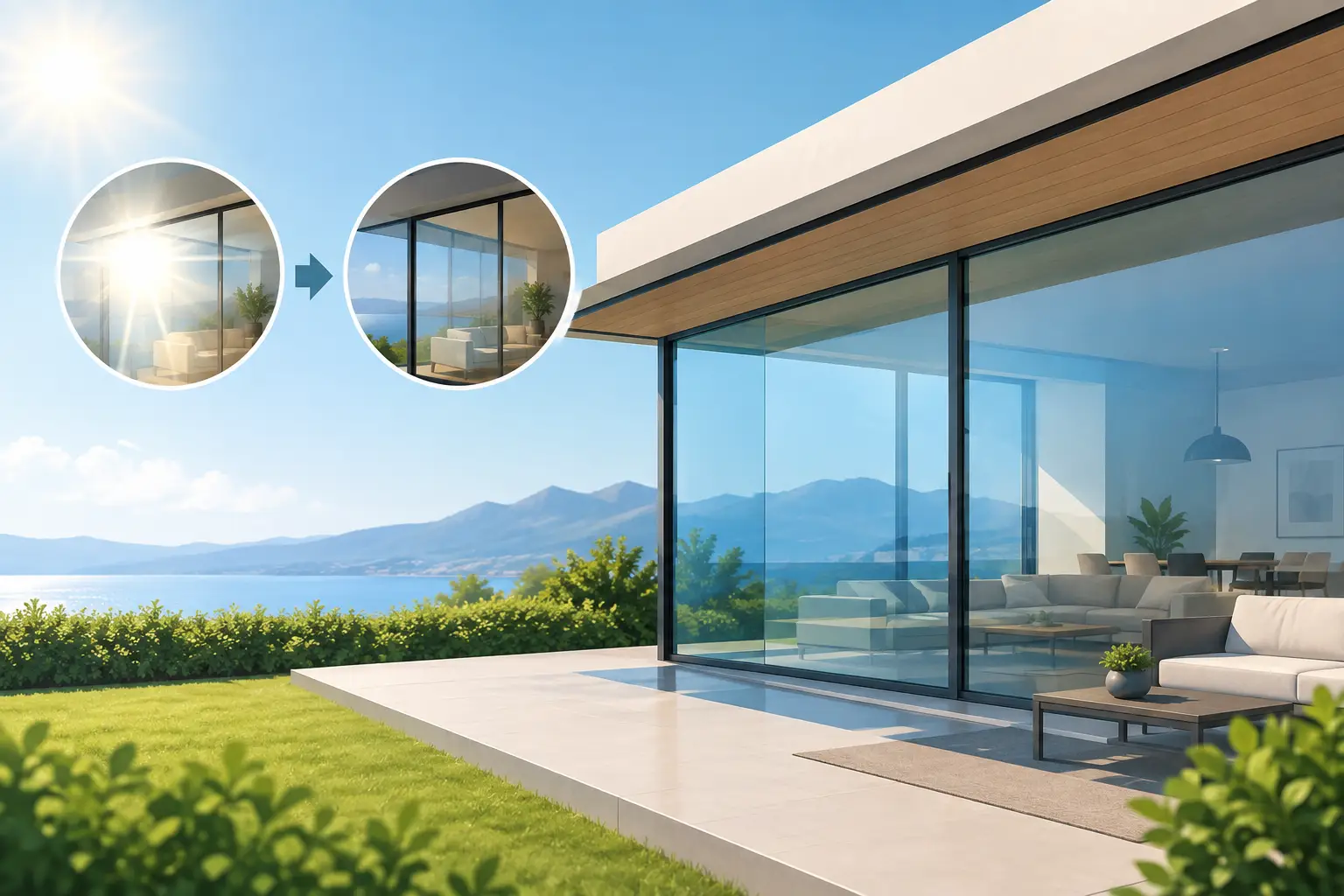
A west-facing glass wall can turn a beautiful living room into the brightest, hottest seat in the house by midafternoon. Screens become difficult to read, polished floors reflect light, and the view that sold the property suddenly feels uncomfortable to enjoy. Effective facade glare reduction changes that experience without forcing the home into permanent darkness.
The right shading system does more than block sunlight. It manages how light enters the space, where it lands, and when it needs to disappear. For homeowners, that means a cooler, more usable room. For architects, designers, and developers, it means preserving a clean glass-forward facade while delivering the comfort occupants expect.
Why Facade Glare Reduction Matters
Glare is not simply bright daylight. It is excessive contrast between a sunlit window and the interior surfaces around it. When direct sun strikes the eyes, a television, a work desk, or a glossy dining table, the visual discomfort can be immediate. Large windows, double-volume spaces, corner glazing, and glass doors all increase the risk because they bring a wider field of sunlight into the room.
Heat usually arrives with the glare. Solar gain can make rooms near exposed facades noticeably warmer than the rest of the home, pushing air-conditioning harder during the hottest hours. A well-planned shade system softens the light before it overwhelms the room and can reduce the need to close off a space with heavy, opaque curtains all day.
There is also a design consideration. Bare glass creates a crisp modern look, but it can feel unfinished when it offers no control over privacy, sunlight, or nighttime ambiance. Shading gives the facade a responsive layer. It allows the architecture to remain open when the conditions are pleasant and protected when they are not.
Start With the Direction of the Sun
The best solution depends on facade orientation, the size of the glazing, and how the room is used. A bedroom, a home office, and an outdoor balcony do not need the same level of control.
East-facing windows receive strong morning light. This can be welcome in living spaces, but it may be disruptive in bedrooms or kitchens where the sun reaches low across counters and seating areas. West-facing facades often create the toughest glare and heat conditions because afternoon sunlight is intense and arrives when the building has already warmed up.
North- and south-facing glass can still cause glare, especially where sunlight reflects off neighboring towers, water, paving, or nearby light-colored buildings. Skylights need their own assessment. Sun from above penetrates deeply into interiors and can create sharp pools of light that move throughout the day.
Before selecting a fabric or motor, stand in the space at different times. Notice whether the discomfort comes from direct sun, reflected glare, heat, lack of privacy, or all four. This simple observation prevents a common mistake: installing a beautiful window treatment that looks right but does not solve the actual problem.
Use the Right Shade System for Each Facade
Roller Blinds for Clean, Controlled Daylight
Roller blinds are one of the most effective choices for large glass panels, sliding doors, and contemporary windows. A sunscreen fabric filters harsh light while maintaining outward visibility during the day. It is a strong option for living rooms, offices, and dining areas where the view matters as much as glare control.
Fabric openness matters. A more open weave preserves more of the view but permits more light and heat. A tighter weave improves shading and privacy but makes the exterior appear less clear. There is no universal best percentage. For a highly exposed west facade, stronger screening may be worth the trade-off. For a shaded high-rise unit with a prized city view, a more open fabric can be the better balance.
Blackout roller blinds are designed for a different job. They are ideal for bedrooms, media rooms, and spaces where near-total light exclusion is needed. They are not usually the first choice when daylight and exterior visibility remain priorities.
Motorized Curtains for Flexible Comfort
Motorized curtains bring softness, insulation, and a more luxurious finish to wide glazing. A sheer curtain can diffuse bright sunlight during the day, while a thicker drape provides privacy and stronger light control at night. This layered approach works particularly well in penthouses, double-volume living rooms, hospitality suites, and homes with full-height glass.
Automation is especially valuable on tall or hard-to-reach facades. With a remote, wall switch, timer, or smart-home routine, curtains can close before the strongest afternoon sun reaches the room. The benefit is practical: occupants are more likely to use a shade system when operating it takes one tap rather than a walk across the room.
For the most polished result, specify tracks that follow the window layout precisely. Curved tracks, extra-wide spans, and ceiling-mounted installations can keep the treatment visually quiet while giving the entire facade full coverage.
Honeycomb Blinds for Insulation and Soft Light
Honeycomb blinds create a cellular structure that traps air, making them a smart choice where glare reduction and insulation are equally important. They soften daylight without the flat appearance of some screen fabrics and suit bedrooms, study rooms, and windows exposed to prolonged sun.
They can also be useful where interior heat loss or heat gain is a concern. However, they are generally better suited to interior window applications than wind-exposed outdoor facades. For a balcony or open terrace, exterior-rated systems are the more durable answer.
Outdoor Zipguide Blinds for Exterior Defense
Stopping sunlight before it reaches the glass is often the strongest strategy for severe exposure. Outdoor Zipguide blinds create a protected vertical screen over balconies, patios, and exterior openings. They can reduce direct sun, improve daytime privacy, and help make outdoor areas more usable when the sun is low.
Because the fabric is held within side channels, the system is more stable than a free-hanging blind in breezy conditions. It is particularly effective for condominiums with exposed balconies, landed homes with patio openings, and outdoor dining spaces that need more than a decorative curtain.
Exterior shades do involve practical considerations. The mounting surface must be suitable, the system must be measured accurately, and wind exposure should guide the product selection. For some projects, WireGuide outdoor blinds or a retractable awning may be a better fit where side channels are not possible or overhead shade is the bigger need.
Design for Layers, Not One Permanent Setting
The most successful facade glare reduction rarely comes from one fabric doing every job. A screen roller blind can handle daytime glare, while curtains create nighttime privacy and warmth. An outdoor blind can reduce solar impact before it hits the glass, while an interior sheer refines the remaining daylight.
This layered approach gives occupants choices. On a cloudy morning, the shades can stay open. When sun begins reflecting onto a work surface, a sunscreen blind can lower halfway. For movie night or sleep, blackout layers take over. Good shading should respond to life in the space instead of making every hour feel the same.
Color selection also affects performance and appearance. Darker sunscreen fabrics often provide a clearer outward view because they reduce internal reflection against the glass. Lighter fabrics may brighten the interior and complement a softer palette, but can show more reflection under certain lighting conditions. Sample the fabric against the actual window, not only under showroom lights.
Make Automation Work With the Building
Motorization is not only a luxury feature. On difficult facades, it is a control tool. Tall windows, skylights, and oversized curtain runs are unlikely to be adjusted manually throughout the day. Automated shades can follow a schedule based on the sun path, room use, or preferred daily routine.
For example, a home office may need glare protection during working hours but full openness after sunset. A west-facing living room may benefit from automatic closing in late afternoon, followed by a partial opening once direct sun has passed. Skylight blinds can be programmed to close during the hottest period without making the whole room feel closed in.
Smart Curtain Malaysia designs integrated shade systems for these architectural conditions, from interior glazing to balconies and glass-roof spaces. The goal is not to hide the facade. It is to make the facade perform better.
Avoid the Common Glare-Control Mistakes
Choosing blackout fabric for every room is an understandable reaction to harsh sun, but it can create a dim interior and remove the value of large windows. On the other hand, a decorative sheer alone may look elegant while doing too little against direct afternoon exposure.
Another mistake is leaving gaps at the sides or top of the shade. Low-angle sunlight finds these openings quickly. Accurate measurement, sufficient overlap, and the correct mounting position are essential, especially for bedrooms and media rooms.
Finally, do not treat outdoor and indoor shading as competitors. Exterior systems protect the glass from incoming solar load. Interior systems manage privacy, atmosphere, and the final quality of daylight. Where the facade is highly exposed, using both can deliver the most comfortable result.
A glass facade should give a home more light, more view, and more architectural presence, not more squinting and heat. Choose shading around the actual sun conditions, then let the system do its work quietly in the background while the room remains comfortable to live in.