

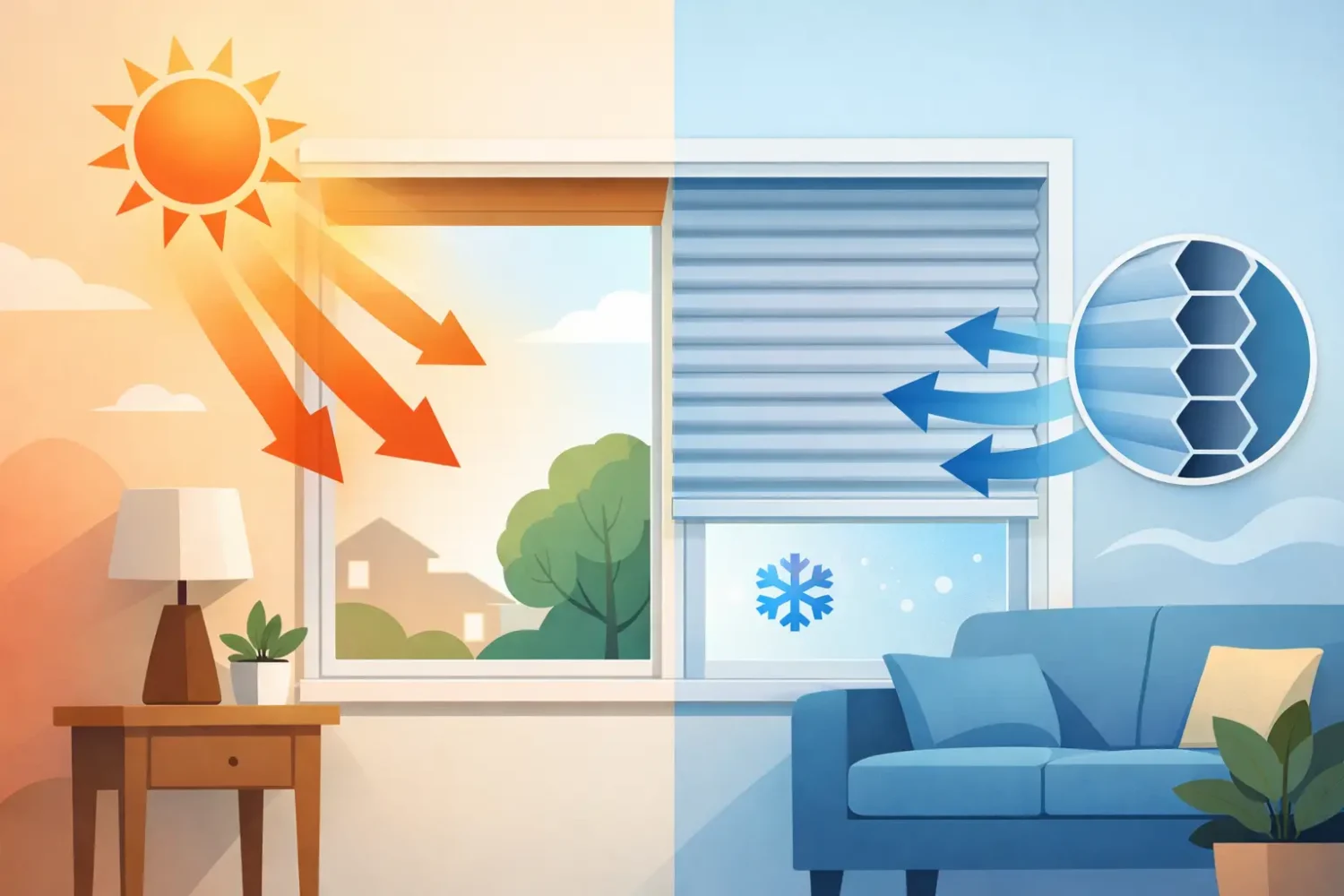
A west-facing window can turn a beautiful living room into the hottest part of the house by midafternoon. So, can honeycomb blinds reduce heat? Yes. Their cellular construction creates an insulating air barrier at the glass, helping slow the transfer of solar heat into the room. For homes with broad windows, tall façades, or intense direct sun, that difference can make a space feel noticeably more comfortable.
Honeycomb blinds are not simply a softer-looking alternative to roller blinds or curtains. They are a performance-focused window treatment designed to manage heat, glare, privacy, and daylight in one clean architectural system. The result is a room that stays brighter when you want it to, cooler when the sun is strongest, and more refined from every angle.
How Honeycomb Blinds Reduce Heat
The secret is in the structure. Honeycomb blinds are also called cellular shades because their fabric is formed into a series of hollow cells. When the blind is lowered, those cells trap layers of still air between the window and the room.
Still air is a natural insulator. It slows the movement of heat, so less outdoor heat passes through the glass and into your interior. In air-conditioned homes, this means the cooling system does not need to fight unfiltered sunlight all afternoon. In cooler periods, the same insulating layer can also help reduce heat loss through the window.
The effect is especially valuable on large glass panels. Windows are one of the least insulated parts of many homes, even when the surrounding walls perform well. A honeycomb blind adds another layer where it matters most without making the room feel heavy or visually crowded.
Heat Control Starts Before the Sun Reaches the Room
Honeycomb blinds work best when they are closed before direct sunlight hits the glass. Once sunlight has heated the floor, furniture, walls, and air inside the room, the blind can reduce further heat gain, but it cannot instantly remove stored heat.
This is where motorization changes the experience. A smart honeycomb blind can be scheduled to lower during peak sun hours, then raise later to restore the view and natural light. For high windows, double-volume spaces, skylights, or difficult-to-reach façades, automated control turns heat management into a daily routine rather than a manual task.
Can Honeycomb Blinds Reduce Heat Enough for Malaysian Sun?
They can make a meaningful difference, but performance depends on the window, the direction it faces, the fabric selected, and how well the blind is fitted. A honeycomb blind is an effective indoor heat-control solution, particularly for rooms with morning or afternoon glare, but it is not a replacement for well-designed glazing, external shading, or proper ventilation in extremely exposed locations.
West-facing rooms usually gain the most from a heat-insulating blind because late-afternoon sun can be harsh and low in the sky. Bedrooms, home offices, living areas, and condominium units with floor-to-ceiling windows are common applications. The blind reduces glare on screens, softens intense brightness, and helps the room hold a more stable temperature.
For a glass roof, open balcony, or outdoor dining zone, an interior honeycomb blind may not be the whole answer. Heat is best stopped before it reaches the glass. Exterior Zipguide blinds, retractable awnings, pergola shading, or dedicated skylight systems may be better suited when solar exposure is severe. The right solution follows the architecture, not a one-product rule.
The Details That Affect Insulation Performance
Not every honeycomb blind delivers the same result. The most effective system is selected and installed around the window rather than treated as a decorative afterthought.
Cell Design and Fabric Opacity
Single-cell honeycomb fabric provides a valuable insulating layer and maintains a light, streamlined appearance. Double-cell designs add another chamber of trapped air, offering stronger insulation for rooms that receive heavy sun or need better year-round thermal control.
Fabric opacity also matters. Sheer and light-filtering fabrics reduce glare while preserving a soft daylight effect. They are ideal when the goal is to cut the sharpest sunlight without darkening the space. For bedrooms, media rooms, and hot west-facing areas, room-darkening or blackout honeycomb fabric provides stronger light control and can improve the sense of thermal comfort.
Darker colors may absorb more solar energy, while lighter shades often reflect more visible light and create a cooler-looking interior. However, color should not be selected on heat performance alone. The fabric opacity, cell construction, and fit around the frame typically have a greater impact than color by itself.
A Precise Fit Around the Window
Gaps allow warm air to circulate around the blind and reduce its insulating effect. A close, accurate fit limits those air paths and gives the cellular structure a better chance to perform.
Inside-mounted blinds can look exceptionally clean when the window recess is deep and square. Outside-mounted blinds may offer better coverage when the frame is shallow, uneven, or exposed, because the fabric extends beyond the glass area. For large panels and unusual shapes, professional measurement is not a small detail. It is the difference between a blind that looks correct and a shade system that actively improves comfort.
Side Tracks and Tensioned Systems
Standard free-hanging honeycomb blinds suit many vertical windows. But for skylights, sloped glazing, and tall installations, a guided or tensioned system keeps the fabric stable and minimizes light gaps. This helps with glare control while maintaining a crisp, tailored finish.
A guided system also prevents the blind from sagging or shifting on angled glass. That makes honeycomb technology particularly attractive for modern homes with architectural windows that conventional curtains cannot cover neatly.
Honeycomb Blinds Versus Curtains and Roller Blinds
Curtains can reduce heat, particularly when they are lined, full, and closed close to the wall. They bring softness and luxury to a room, but their insulation performance can vary widely depending on fabric weight, fullness, and how much air circulates behind them.
Roller blinds offer a sleek, minimal finish and are excellent for glare control. Solar screen fabrics can preserve an outward view while filtering harsh light, while blackout rollers create strong room-darkening performance. Their flat fabric construction, however, does not create the same insulating air pockets as honeycomb blinds.
Honeycomb blinds are the stronger choice when insulation is a central priority and you want a compact treatment that stacks neatly when raised. They suit modern interiors where clean window lines matter. Curtains may be the better choice when acoustic softness, dramatic layering, or a hotel-style finish is the main design goal. In some projects, combining curtains with honeycomb blinds delivers both performance and a more luxurious visual result.
Where Honeycomb Blinds Make the Biggest Difference
Honeycomb blinds are most effective in spaces where glass is directly affecting daily comfort. Think master bedrooms that heat up before bedtime, home offices with screen glare, living rooms with expansive windows, and high-rise units where privacy and sunlight arrive from the same direction.
They are also an intelligent choice for rooms that are used at different times of day. A dining area may need filtered daylight in the morning, a shaded setting at lunch, and privacy at night. With top-down or dual-function configurations, it is possible to protect the lower part of the room from heat and visibility while keeping daylight entering from above.
For property developers, hospitality operators, and interior professionals, the appeal is equally practical. Honeycomb systems provide a consistent, tailored finish across repeated window types while adding a clear comfort benefit that residents and guests can feel.
Make Heat Control Part of the Whole Window Strategy
A blind performs best as part of a complete shading plan. Glass orientation, window size, ceiling height, air-conditioning use, exterior exposure, and the room’s purpose should all guide the specification. A bright north-facing room may only need light filtering, while a large west-facing façade may call for blackout cellular fabric, smart scheduling, and exterior shading support.
Smart Curtain Malaysia designs shade systems around these real conditions, from compact condominium windows to oversized glass walls and skylights. The goal is not simply to cover a window. It is to make the space cooler, calmer, more private, and easier to live in.
If a room is consistently hot, start by observing when the heat arrives and where the sun lands. That simple pattern will point you toward the honeycomb blind configuration, fabric, and control method that can make the most visible difference every day.