

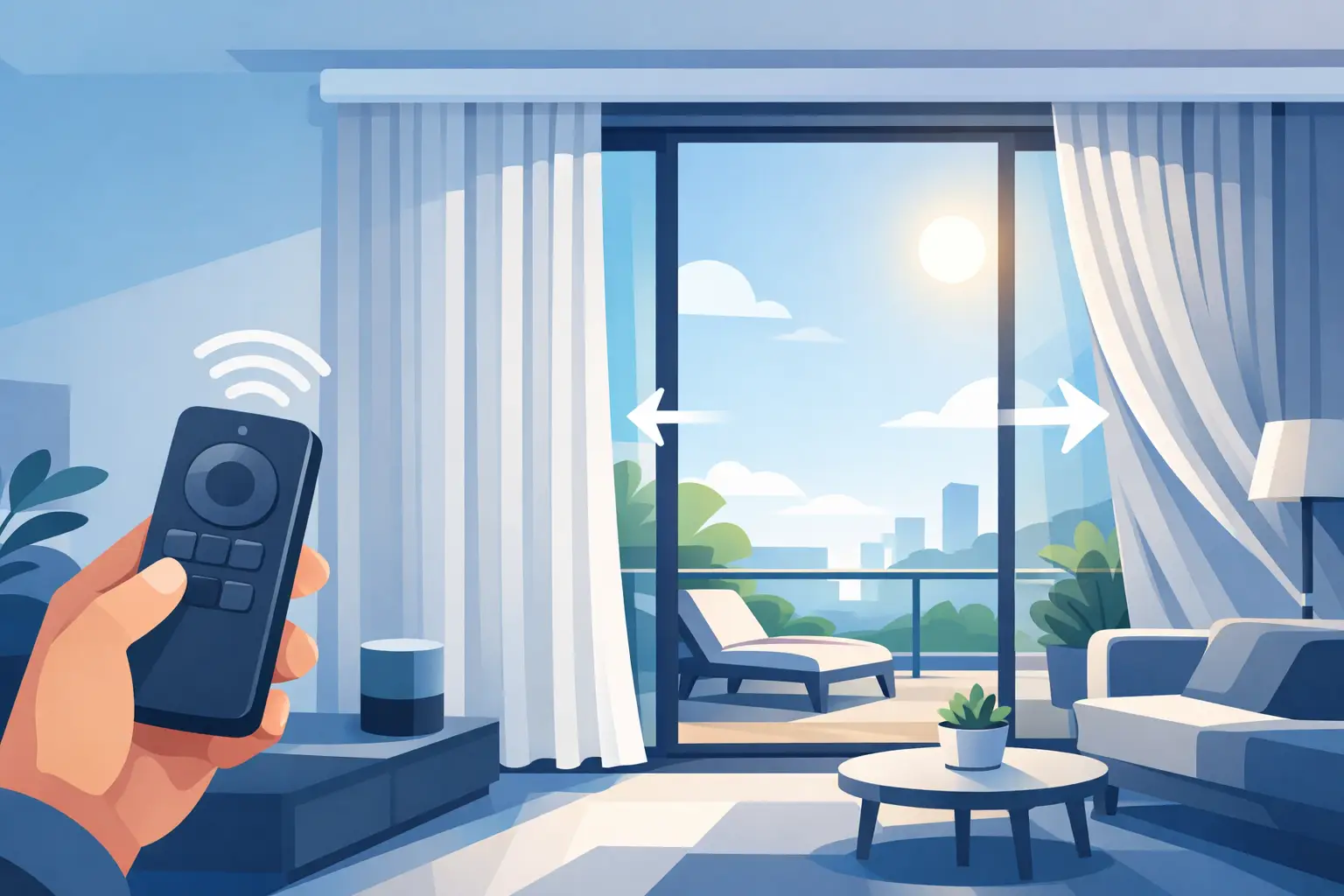
A wall of glass can make a living room look spectacular at 10 a.m. and unbearable by 3 p.m. The same applies to a bedroom with tall windows, a condo facing neighboring towers, or a double-height space where manual curtains are hard to reach. So, are motorized curtains worth it? For many modern homes, they are not simply a luxury upgrade. They are a practical way to control heat, glare, privacy, and atmosphere without disrupting the architecture of the room.
The real value depends on the windows, the fabric, and how you live in the space. A motorized curtain system will not turn poor glass or unsuitable fabric into perfect insulation. But when designed correctly, it makes daily light and privacy control far easier, more consistent, and more refined.
What You Are Really Paying For
Motorized curtains combine a curtain track, an electric motor, and a control method such as a wall switch, remote, app, or smart-home scene. Instead of pulling fabric by hand, the system opens or closes the curtains at your command or according to a schedule.
That convenience matters, but it is only one part of the investment. The stronger case is control. Curtains that are difficult to operate often stay in one position all day. In a sunny room, that can mean unwanted solar heat and glare. In a bedroom, it can mean waking earlier than intended. Automation makes the right setting effortless, so the shading system is more likely to perform as designed.
A quality motorized track also gives large or full-height curtain panels a smoother, more composed movement. There are no tugged hems, uneven stacking, or hands constantly touching delicate fabric. In homes where the window treatment is a major design feature, that polished operation is part of the appeal.
Are Motorized Curtains Worth It for Your Windows?
They are most worthwhile when manual operation is inconvenient or when window coverings have a direct effect on comfort. Oversized curtains, wide sliding doors, tall façades, bay windows, and curtains mounted above a staircase are obvious candidates. If accessing the curtain requires moving furniture or reaching across a bed, automation solves a daily annoyance that rarely gets better over time.
They also make sense in rooms with strong sun exposure. Closing curtains before afternoon sun reaches the glass can reduce glare and help limit solar heat gain. The result is a space that feels more comfortable for relaxing, working, watching television, or entertaining. Pairing the system with a lining or blackout fabric is especially effective where heat and light are persistent concerns.
Bedrooms are another strong use case. A scheduled blackout curtain can close at night and open gradually in the morning, creating a more intentional sleep environment. For shift workers, young children, and anyone living near bright streets or close neighbors, the privacy benefit is immediate.
In contrast, motorization may be harder to justify for a small, rarely used window with a lightweight curtain panel. If the curtain is easy to reach and is opened only occasionally, a well-made manual track may be the better value. Smart shading should solve a real operational or environmental problem, not add technology for its own sake.
Comfort Is the Benefit You Feel Every Day
The best motorized curtain systems do more than look impressive during a home tour. They improve the moments that happen every day: reducing morning glare on a kitchen counter, softening harsh late-afternoon light in a living room, or giving a ground-floor bedroom privacy at the touch of a button.
For glass-heavy homes, timing is critical. Heat enters before you feel the need to close the curtains. With scheduled settings, shades can respond earlier, helping maintain a steadier indoor environment. This does not replace air conditioning or high-performance glazing, but it can support both by reducing direct sunlight at the window.
Motorization is also useful for layered window treatments. Sheer curtains can diffuse daylight while preserving a bright, open feeling. Blackout curtains can then close later for privacy, rest, or movie viewing. Rather than choosing between daylight and seclusion, the room can shift easily from one mood to another.
The Design Advantage: Cleaner Windows, Better Proportions
A premium curtain should frame a room, not make it feel crowded. Motorized tracks are often concealed in a ceiling pocket, behind a pelmet, or within a recessed detail. This creates a clean ceiling-to-floor effect that suits contemporary homes, penthouses, hospitality spaces, and show units.
The system is particularly effective for wide expanses of glass. A single command can move multiple curtain sections together, keeping the elevation balanced. For interior designers and developers, this consistency matters. The window treatment looks intentional at every unit and remains easy for residents or guests to use.
At Smart Curtain Malaysia, the focus is not simply on adding a motor to a conventional curtain. The right solution considers the window height, track layout, fabric weight, stacking space, daylight direction, and how the room is used. That is what turns automation into an integrated architectural shading system.
Smart Controls Should Make Life Simpler
The most useful control option is the one your household will actually use. A wall switch is straightforward and reliable for everyday operation. A remote is convenient from bed or the sofa. App control is valuable when you want to operate curtains while away, while scheduled scenes can manage rooms at set times.
For a connected home, motorized curtains can join routines with lighting, air conditioning, or security settings. A “good night” scene might close bedroom blackout curtains and lower lighting. An “away” setting can close selected curtains during the hottest part of the day while still allowing other areas to receive daylight.
Do not overcomplicate the system. Not every room needs elaborate automation. A simple motor with a wall control may be perfect for a guest room, while the main living area and primary bedroom may benefit from schedules and smart-home integration.
The Trade-Offs to Consider Before You Buy
Motorized curtains cost more than manual curtains. The total price depends on motor type, track length, number of panels, fabric weight, power access, controls, and installation conditions. Curved tracks, double layers, very tall windows, and multiple synchronized sections require more planning and can increase the budget.
Power planning is essential. Hardwired motors offer a clean, permanent solution and are ideal when included early in renovation or construction. Battery-powered options can be useful where wiring is difficult, but batteries need periodic charging or replacement. For new homes and major renovations, planning power points before ceilings are closed usually delivers the neatest result.
There is also a maintenance consideration. Quality motors are designed for repeated use, but curtains still need correct sizing, proper installation, and fabric that suits the track capacity. A system should not strain to move overly heavy panels or fabric that drags on the floor. Professional measurement and setup protect both the motor and the appearance of the curtains.
Finally, choose the fabric for performance, not only color. Sheers are excellent for filtered daylight but will not provide complete nighttime privacy on their own. Blackout fabrics improve room darkening, while thermal linings can add another layer of comfort. The motor is the operating system; the fabric determines much of the light, privacy, and insulation result.
Where Motorization Delivers the Strongest Return
Motorized curtains tend to deliver the clearest value in primary bedrooms, living rooms, media rooms, double-height spaces, and homes with broad sliding doors or floor-to-ceiling glazing. They are equally compelling in hospitality and development projects, where easy operation and a premium guest experience need to be repeated across many rooms.
For property owners, the upgrade can also make a home feel more considered. Buyers and tenants notice the difference when curtains move quietly, stack neatly, and respond to the room rather than becoming an awkward manual task. It is a small interaction, but it signals a higher standard of planning.
The decision is not really about whether a motor is impressive. It is about whether your window coverings work hard enough for the space they occupy. When sunlight, privacy, difficult access, or large-scale glass are part of daily life, motorized curtains earn their place quietly – one comfortable room at a time.